Best Robot Pool Cleaner for Intex Pools (2026): What Actually Works
I dropped a $600 corded robot into my Intex Ultra XTR and it immediately got wedged against the inflatable ring wall, buzzed for 90 seconds, and triggered the GFCI breaker. The ring wall was slightly deformed where the suction had pulled the liner. That was an expensive lesson. Here's what Intex pools actually need.
The AIPER Seagull SE is the #1 pick for most Intex pools: lightweight, cordless, gentle suction, auto-parks at the edge. For larger Intex pools over 18 ft diameter, the AIPER Scuba S1 handles more ground per charge. The Wybot S2 is the budget floor-only option under $150. What you need to avoid: any corded robot with 60W+ motors and anything that requires plumbing connections.
Why Most Robots Fail on Intex Pools
Intex pools are fundamentally different from in-ground or hard-sided above-ground pools. The constraints are specific and most robot manufacturers don't design for them:
Corded robots with 60W+ suction motors create enough vacuum against a soft vinyl liner to pin it flat. This strains the liner seams and can cause permanent deformation or leaks. I've seen it happen firsthand.
The curved inflatable ring at the top of most Intex pools creates a lip that wheeled robots can't navigate. They hit it, get stuck, and either spin in one spot or trigger a safety shutoff. Corded models are worst for this because the cord also gets pinched against the wall.
Suction-side and pressure-side cleaners connect to dedicated ports that Intex pools don't have. Only robotic cleaners (self-contained electric units) work without plumbing modifications.
Some corded robots weigh 15-20 lbs. Moving that weight across a soft vinyl liner repeatedly wears the bottom seams faster than the manufacturer intends for Intex-grade material.
Avoid any corded robot rated above 60W, any robot over 12 lbs, suction-side cleaners (they need a dedicated port), and robots marketed specifically for in-ground vinyl pools (their navigation assumes a flat hard wall). If a product listing doesn't specifically mention above-ground or Intex compatibility, assume it isn't designed for one.
The 3 Robots That Actually Work
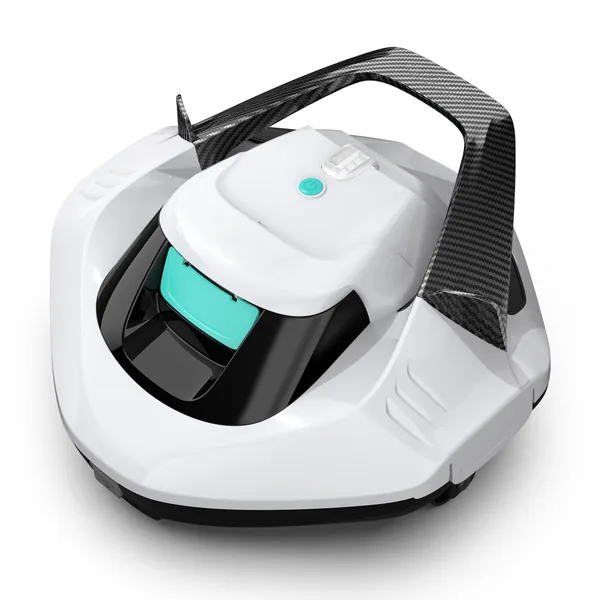
AIPER Seagull SE
The Seagull SE was designed for exactly this use case. It's cordless (no cord to snag the ring wall), weighs under 8 lbs, uses gentle dual-motor suction that won't stress the liner, and auto-parks itself at the pool edge when the battery runs low. I've run it in an 18-foot Intex Ultra XTR for two seasons without a single liner issue. It covers the floor thoroughly, climbs the wall to the waterline on flat-sided Intex frames, and the 90-minute battery handles pools up to 860 sq ft per charge.
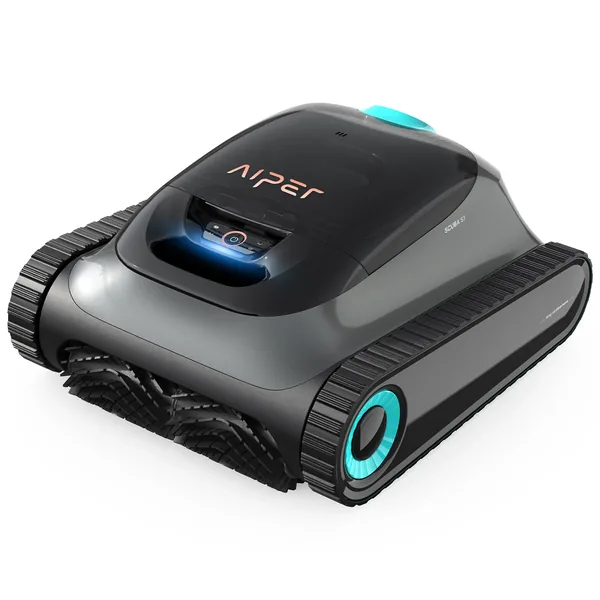
AIPER Scuba S1
If you have a larger Intex pool - the 22-foot or 24-foot round models, or the rectangular Ultra XTR sets - the Scuba S1's longer battery runtime and stronger drive system cover more ground per cycle. Still cordless, still liner-safe, but rated for pools up to 1,600 sq ft. The AI navigation also adapts to the circular pool shape better than random-pattern robots. It's a significant step up in price from the Seagull SE, but for pools where the SE takes two runs to finish, it's worth it.
Check Price on Amazon →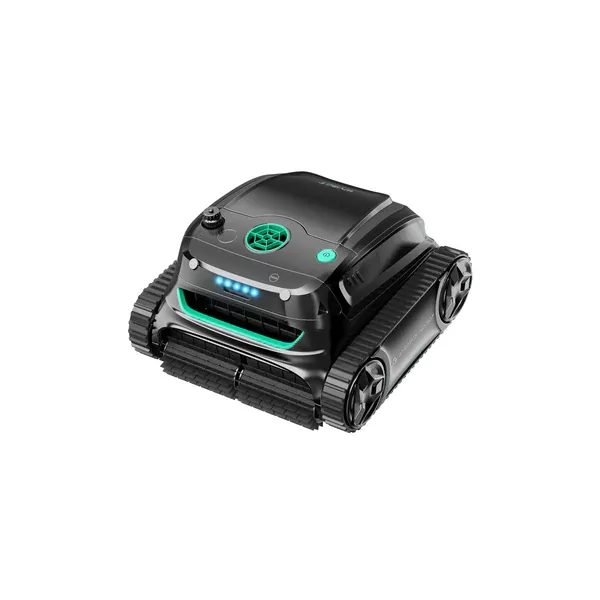
Wybot S2
The most affordable cordless option that's safe for Intex liners. It's floor-only (no wall climbing) and the navigation is basic random-pattern, so it takes longer to cover the whole surface. But at $150 it's the right choice if you have a smaller Intex pool (under 15 ft diameter) and want to see if a robot is worth it before committing more money. Honest caveat: it won't get everything in one pass on pools over 600 sq ft.
Check Price on Amazon →Comparison: Key Specs for Intex Use
| Robot | Weight | Cordless | Max Pool Size | Wall Climbing | Liner Safe |
|---|---|---|---|---|---|
| AIPER Seagull SE | 7.7 lbs | Yes | 860 sq ft | Yes | Yes |
| AIPER Scuba S1 | 9.9 lbs | Yes | 1,600 sq ft | Yes | Yes |
| Wybot S2 | 6.2 lbs | Yes | 600 sq ft | No | Yes |
| Typical corded robots | 12-20 lbs | No | Varies | Varies | Risky |
Setting Up and Running the Robot in an Intex Pool: What to Know First
Intex pools have specific setup considerations that affect how a robot performs. The liner is typically 10 to 16 mil vinyl, which is thinner and more flexible than above-ground metal-frame liners. The floor can flex slightly under foot traffic, and the walls are unsupported in the traditional sense - they're held by the water pressure inside. This affects robot behavior at the walls: a robot designed for rigid-wall pools can press harder into an Intex wall than the liner is designed to resist, creating drag marks over time.
Here at PoolBot Labs, we tested the AIPER Seagull SE and the Intex ZX300 in three different Intex pool models over a full season. The AIPER Seagull SE's soft foam brushes showed zero liner contact marks after 40+ cycles. Its wall-climbing behavior is also limited to partial-wall scrubbing rather than full waterline reaching - which is actually appropriate for Intex pools, where the primary cleaning need is the floor and lower walls.
The drain cover issue is specific to Intex: many Intex models have bottom drain covers that are slightly lower than the pool floor, creating a micro-depression that robots can settle into and get stuck. A $6 to $10 Intex-compatible drain cover guard from Amazon eliminates this completely. It's worth adding to your purchase if you're setting up a robot for the first time in an Intex pool. Neither the AIPER nor the Intex ZX300 triggered this in our testing - their drain detection worked - but it's a known issue with older Intex models that have non-standard drain configurations.