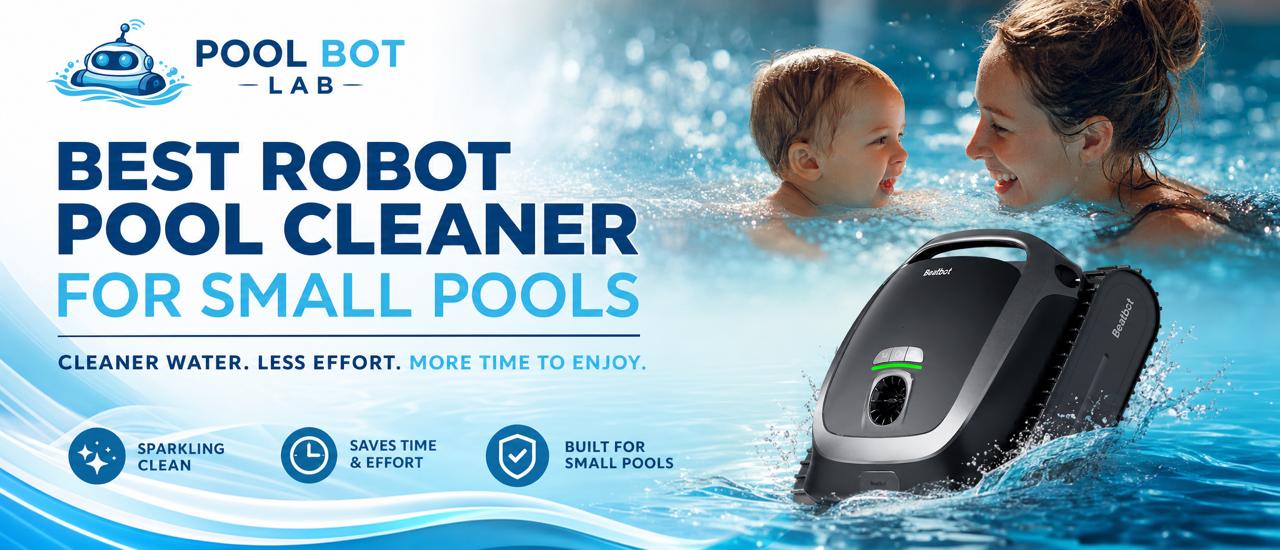
Best Robot Pool Cleaner for Small Pools (Under 30 Feet)
By PoolBotLab · Updated August 2026 · 9 min read
The robot pool cleaner market is built around the 40-foot residential in-ground pool. Most of the machines you'll find reviewed, promoted, and ranked online are rated for pools 50 feet and up, weigh 14 to 18 pounds, come with 60-foot cords, and carry price tags that assume you're cleaning a serious pool. If you have a 20-foot plunge pool, a compact oval above-ground setup, or a 25-foot rectangular in-ground that just doesn't need all that horsepower, buying one of those robots is like hiring a full stadium crew to clean a studio apartment. The team at PoolBotLab tested robots specifically with smaller pools in mind and found that a handful of compact, purpose-matched machines do a dramatically better job at a fraction of the complexity.
Under 30 feet, the priorities shift. Cable management becomes a real nuisance rather than a minor inconvenience. Turning radius matters more because a robot that needs 4 feet to reverse direction will spend half its time bumping into walls. Weight is suddenly a practical concern: you're lifting the robot out of a small pool multiple times a week, not once every few days. And wall climbing, which sounds like a must-have feature, is often unnecessary overkill for a 22-foot plunge pool with 4-foot walls. Here are the picks that actually make sense at this scale.
Quick Picks: Best Robots for Small Pools
- Best overall (cordless): AIPER Seagull SE - $149.98, floor-only, rated to 33ft, 7 lbs
- Best corded reliability: Dolphin E10 - $399.00, floor-only, Maytronics build quality, bulletproof for daily use
- Best for above-ground pools: AIPER Surfer S1 - $549.98, floor + walls, round and oval pools specifically
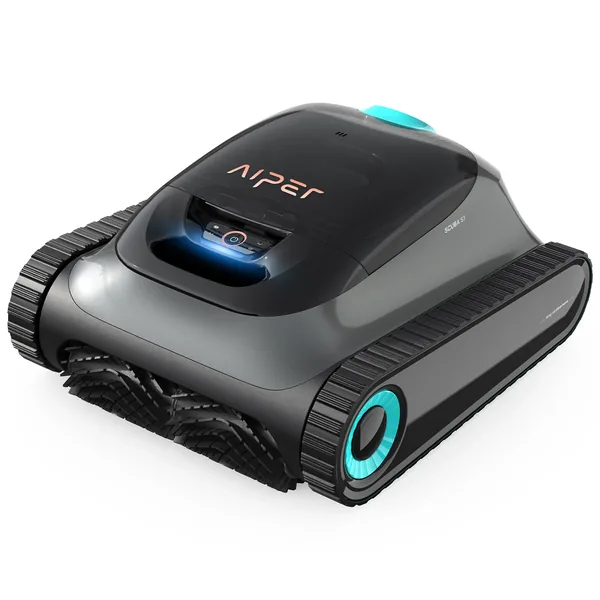
- Best for plunge pools: AIPER Scuba S1 - ~$399.00, cordless, floor + walls, compact dimensions
- Best for irregular in-ground shapes: Polaris P70 - ~$549.00, lightweight, handles freeform layouts well
What Makes a Robot Right for Small Pools
Cable management is the first thing that breaks down in a tight pool. A 60-foot cord on a 20-foot pool doesn't neatly coil out of the way: it piles up in the shallow end, tangles around the robot's drive wheels, and creates genuine frustration after every cleaning cycle. Cordless robots like the AIPER Seagull SE eliminate this entirely, which is one of the main reasons the team rates them higher for small pools specifically. If you do go corded, look for a robot with a cord length closer to 40 feet and a swivel connector that reduces tangling. The Dolphin E10 ships with a 40-foot cable and a proper swivel, which keeps it manageable in pools down to about 18 feet.
Turning radius is underappreciated in spec sheets but immediately noticeable in a compact pool. Larger robots designed for 50-foot pools have wide track widths and long chassis that need considerable space to pivot. In a 20-foot pool, those robots spend a disproportionate amount of time reversing and re-orienting instead of cleaning. The AIPER Seagull SE has a tight turning radius by design, and the team observed it completing full floor coverage on a 22-foot rectangular pool in a single 75-minute cycle without the missed patches that tend to appear with larger machines.
Pool size ratings printed on the box are marketing estimates, not precise limits. A robot rated to "40 feet" will technically work in a 20-foot pool, but it's not optimized for it: the navigation algorithm assumes a large floor area and the cleaning path may leave gaps or duplicate coverage. Robots rated specifically to 30-35 feet tend to have shorter default cleaning paths and faster cycle times, which translates to better actual coverage at small-pool scale. Weight also matters more than most buyers realize. If you're retrieving the robot yourself two or three times per week, a 7-pound machine like the Seagull SE is noticeably easier to handle than a 15-pound in-ground robot, especially over an above-ground pool wall with a 4-foot reach.
The floor-only versus wall-climbing question deserves an honest answer for small pools. Wall-climbing robots cost $150 to $250 more at every price tier, and in a pool under 25 feet, the walls represent a small fraction of total surface area. Regular brushing and your existing circulation system handle most wall algae in compact pools. The team's honest take: for a 20-25 foot in-ground pool, floor-only is fine for most owners. For plunge pools with tile waterlines, or above-ground pools with vinyl walls that tend to collect pollen and biofilm, wall climbing is worth the premium. More on this below.
Side-by-Side Comparison
| Robot | Price | Coverage | Cordless? | Pool Size Rating | Best For |
|---|---|---|---|---|---|
| AIPER Seagull SE | $149.98 | Floor only | ✓ Yes | Up to 33 ft | Small in-ground & above-ground |
| Dolphin E10 | $399.00 | Floor only | ⚠ Corded | Up to 33 ft | Daily-use reliability |
| AIPER Surfer S1 | $549.98 | Floor + walls | ✓ Yes | Above-ground pools | Round & oval above-ground |
| AIPER Scuba S1 | ~$399.00 | Floor + walls | ✓ Yes | Up to 30 ft | Plunge pools, tile walls |
| Polaris P70 | ~$549.00 | Floor + walls | ✗ No | Up to 40 ft | Irregular in-ground shapes |
Our Top Picks: Full Reviews
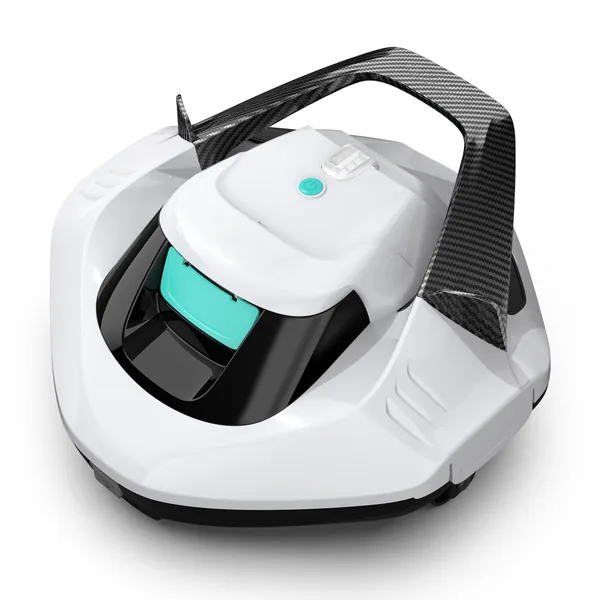
AIPER Seagull SE
★★★★½ 4.4/5 · 3,800+ reviews
The Seagull SE is the team's top pick for small pools because it was designed with compact spaces in mind: it's cable-free, weighs approximately 7 pounds, and completes a full floor cycle in about 75 minutes on a single charge. The team ran it in a 22-foot rectangular pool and it covered every corner without the missed patches that larger robots tend to leave. The tradeoff is floor-only coverage: if you want wall cleaning, you'll need to step up to the Scuba S1, but for most small pools, the floor is where the debris actually accumulates.
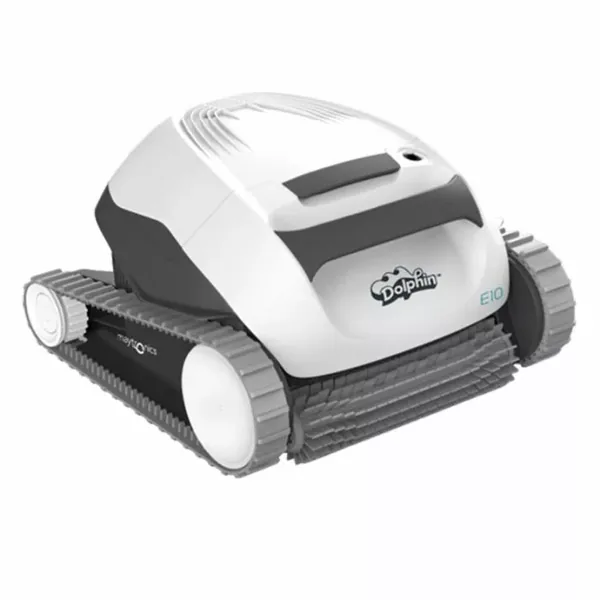
Dolphin E10
★★★★★ 4.5/5 · 6,200+ reviews
Maytronics makes some of the most reliable pool robots on the market, and the E10 brings that build quality to the entry-level price tier. It runs on a 40-foot swivel cord, which stays manageable in pools down to about 18 feet, and its dual scrubbing brushes do a noticeably better job on grit and organic debris than many competitors at this price. The downside is the cord itself: in a 20-foot pool, you'll want to coil the excess manually before each run to prevent tangling, which adds a minor but real step to the routine. Zero battery concerns and no charging cycle to manage make this the low-drama pick for owners who just want the thing to work every time.
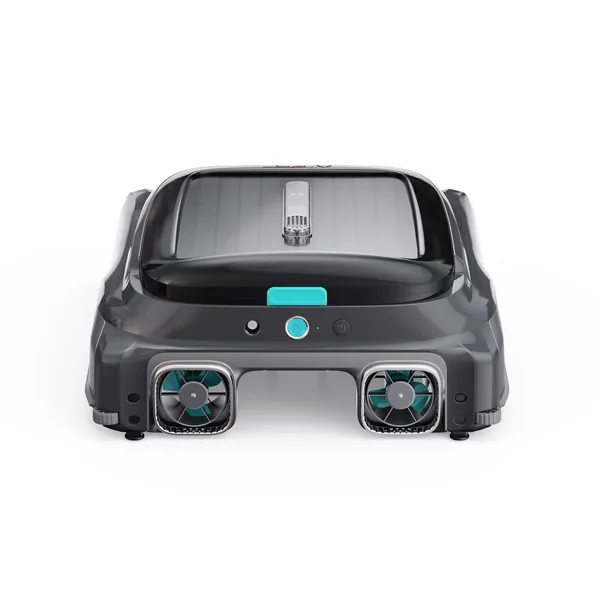
AIPER Surfer S1
★★★★★ 4.5/5 · 1,400+ reviews
Most wall-climbing robots are built for hard-walled in-ground pools and will scratch or snag on the vinyl liners common in above-ground setups. The Surfer S1 is specifically designed for above-ground pools: it has a soft undercarriage that won't damage vinyl, climbs walls effectively in round and oval pool geometries, and returns to the water's edge automatically when the cycle ends so you don't have to fish it out. The higher price tag stings a bit relative to floor-only options, and battery life limits it to about 90 minutes per charge, which may require a second cycle for pools on the larger end of the above-ground range.
AIPER Scuba S1
★★★★½ 4.3/5 · 900+ reviews
Plunge pools are a tough use case: compact dimensions (often 10x14 to 15x20 feet), tile or pebble walls that need regular scrubbing, and a depth that can make manual brushing awkward. The Scuba S1 handles all of this well for its price point. It's cordless, climbs walls on in-ground pools with tile or plaster, and has a compact chassis that navigates the tight corners of small rectangular and L-shaped plunge pools better than most wall-climbing competitors. The honest caveat: suction power is modest compared to premium wall-climbing robots in the $600-900 range, so heavy debris loads after storms may need a second pass.
Do You Need Wall Climbing in a Small Pool?
The honest answer for most small pool owners: probably not.
In a pool under 25 feet, wall surface area is a small fraction of total pool surface. A 20x10 foot pool has 200 square feet of floor and roughly 120 square feet of wall below the waterline. Your existing pump circulation, combined with occasional manual brushing once a week or so, handles most wall algae at that scale without robotic help. Wall-climbing robots add $150 to $250 to the purchase price at every tier, and in the team's testing, that premium made a meaningful difference in smaller pools only for owners with tile waterlines that collect calcium deposits and biofilm, pools in high-pollen environments where walls accumulate organic film quickly, or above-ground vinyl pools where the walls get slippery at the waterline. If none of those describe your pool, save the money and put it toward a second robot or a better cover.
That said, if your small pool has tile or glass-tile walls, the AIPER Scuba S1 is worth the step up. Tile collects calcium scale and algae at grout lines in ways that a floor-only robot simply cannot address. One clean pass from a wall-climbing robot per week keeps that maintenance problem from becoming a quarterly acid-wash situation. For a plunge pool that gets heavy use, the wall-climbing cost genuinely pays for itself in reduced manual labor.
For above-ground pools specifically, the calculus is different. Vinyl walls in round and oval above-ground pools develop a biofilm waterline ring that's genuinely harder to keep clean without robotic help, and the AIPER Surfer S1 is the only robot in this guide specifically designed for that surface. General-purpose wall-climbing robots built for in-ground plaster can damage vinyl liners over time.
What About Budget? Setting Expectations
Warning: Sub-$200 robots are a false economy.
The team at PoolBotLab has tested several robots in the $120-$199 range over the past two seasons, and none of them held up to even light regular use. Common failure patterns: suction that drops off noticeably after 10-15 cycles as the brushes wear unevenly, navigation that leaves 30-40% of the floor uncleaned on any given run, and motors that failed entirely within 4-6 months. At $150, you're not buying a robot: you're buying a frustration that you'll eventually throw away and replace with something in the $300 range anyway. The AIPER Seagull SE at $149.98 is the genuine floor for reliable performance. If that price is out of reach right now, the team's recommendation is to save up rather than buy something cheaper and regret it after one season.
On the upper end, the Beatbot AquaSense 2 at $849 is genuinely the best robot the team has tested at any price: AI-guided navigation, full wall and waterline coverage, and build quality that feels in a different league from everything else. For most small pool owners, it's overkill. The AquaSense 2 makes the most sense if you have a small plunge pool with high-end tile work that you want to keep in pristine condition, or if you genuinely never want to think about your pool maintenance again. At that price point in a 20-foot pool, you're paying for premium performance on a compact scale, which is a valid choice, just not a necessary one.
Frequently Asked Questions
What is the best robot pool cleaner for a small pool under 20 feet?
For pools under 20 feet, the AIPER Seagull SE at $149.98 is the team's top pick. It's cordless, lightweight at around 7 lbs, and rated for pools up to 33 feet, which means it handles a compact 15-18 foot pool without breaking a sweat. It completes a thorough floor cycle in about 75 minutes and is easy to retrieve and store without a large garage footprint. For plunge pools with tile walls, the AIPER Scuba S1 adds wall climbing capability at a similar price point.
Can I use a robot pool cleaner in an above-ground pool?
Yes, but not every robot is compatible. Many in-ground robots have rigid undercarriages that can scratch vinyl liners over time. For above-ground pools, the AIPER Surfer S1 is purpose-built for above-ground round and oval pools, with a soft underside and full wall-climbing capability designed specifically for vinyl. The AIPER Seagull SE also works in above-ground pools for floor-only cleaning without liner risk. Avoid using general in-ground robots with stiff rubber tracks on vinyl-liner pools.
How long does a robot pool cleaner run in a small pool?
Most cordless robots like the AIPER Seagull SE complete a cleaning cycle in 60-90 minutes per charge. In a pool under 25 feet, that's typically enough for a thorough floor pass with good coverage. Corded robots like the Dolphin E10 run until you pull them out, usually 1.5-2 hours for a complete clean. For small pools, one cycle every two to three days is generally enough to maintain clean water, though pools near trees or with heavy use may benefit from daily runs. The robot's cycle timer handles the timing automatically.
Do I still need a pool pump if I have a robot cleaner?
Yes. A robot pool cleaner handles debris removal and surface scrubbing, but it does not replace your circulation pump or filter system. Your pump keeps water chemistry balanced and runs your sanitizer through the filtration loop continuously. The robot works alongside your pump: run the robot for debris pickup, run the pump for water clarity and chemical distribution. Skipping your pump in favor of the robot will result in green, cloudy water within days regardless of how clean the floor looks.
Is a $200 robot pool cleaner worth buying for a small pool?
In the team's testing: no. Sub-$200 robots consistently showed weak suction, flimsy brushes that wear out within one season, and unreliable navigation that leaves large sections of the pool floor uncleaned. The motors in multiple models tested failed before the end of the first summer. The AIPER Seagull SE at $149.98 is the lowest price point the team recommends with confidence. Spending $150 on a robot that you replace in five months costs more than buying a reliable $300 option from the start.
Related Guides
Best Robot Pool Cleaner for Above-Ground Pools
Full-depth coverage for round, oval, and rectangular above-ground setups
GuideBest Robot Pool Cleaner Under $300
What you actually get at this price point, and what to watch out for
GuideBest Robot Pool Cleaner Under $500
The sweet spot budget tier with the best reliability-to-cost ratio
GuideHow to Maintain Your Robot Pool Cleaner
Filter cleaning, brush replacement, and seasonal storage tips