How to Maintain a Robotic Pool Cleaner
I skipped cleaning my robot's filter for three weeks because I was busy. By week four it was barely moving, leaving a third of the pool floor untouched. Three minutes of rinsing would have prevented all of it. Here's the full routine - simple once it's a habit.
After every use (5 min): remove, rinse filter, check brushes, coil cord, store in shade. Monthly (30 min): deep-clean filter, inspect tracks and seals, check brush wear. That's genuinely all it takes to keep a robot running for years.
After Every Use: The 5-Minute Routine
I do this every single time, without exception. It takes about 5 minutes total and it's the single biggest factor in how long a robot lasts.
Hold it at an angle over the pool for 30 seconds. Water draining back into the pool carries debris with it rather than leaving it in the motor housing.
Pull the cartridge or bag out and rinse with a garden hose from the inside out. Rinse until water runs clear. If it's grey-brown and sluggish after rinsing, it's time for a deep clean or replacement.
Spin the brushes by hand. They should rotate freely. Remove any hair, string, or debris wrapped around the axle. Takes 30 seconds and prevents brush motor strain.
A quick rinse with fresh water removes chlorine residue from the housing and tracks. Chlorine sitting on rubber for hours accelerates degradation. Takes 30 seconds with a hose.
Large loose loops, minimum 12-inch diameter. Never wrap tightly. Put it somewhere shaded - not in direct sun next to the pool. If storing more than 48 hours, bring it indoors.
Dish soap, household cleaners, and bleach destroy the filter media's electrostatically charged fibers that capture fine particles. Water only - always. If the filter won't come clean with water after a soak, it's time to replace it, not clean it harder.
Monthly Maintenance Checklist
| Task | Time | What to Look For |
|---|---|---|
| Filter deep clean | 10 min | Soak in clean water 30 min, rinse, check for tears or grey discoloration that won't rinse out |
| Brush inspection | 5 min | Worn bristles (less than 1/4 inch remaining), cracked brush housing, uneven wear patterns |
| Drive track check | 5 min | Cracks, missing tread blocks, loose tension. Rotate tracks by hand - both sides should move at same resistance |
| Seal and gasket inspection | 5 min | Cracks, hardening, or whitish calcium deposits on seals around the motor housing and filter access panel |
| Cord inspection | 5 min | Kinks, cracks in insulation, discoloration near the connector end. Any crack in the cord is a safety issue - replace before next use |
When to Replace Parts
Replace annually even if it looks fine. Filter media degrades with UV and chemical exposure regardless of appearance.
When bristles wear below 1/4 inch or cleaning quality drops. Worn brushes leave debris the robot should be picking up.
Stretched or cracked belts cause uneven movement and missed cleaning paths. One of the first signs is the robot veering in circles.
Drop your robot in and watch for the first 5 minutes. It should move in systematic rows or a predictable pattern. If it's spinning in circles, sticking to one wall, or moving slowly with reduced suction - those are maintenance signals, not product failures. 80% of "broken" robots have a dirty filter or a wrapped brush.
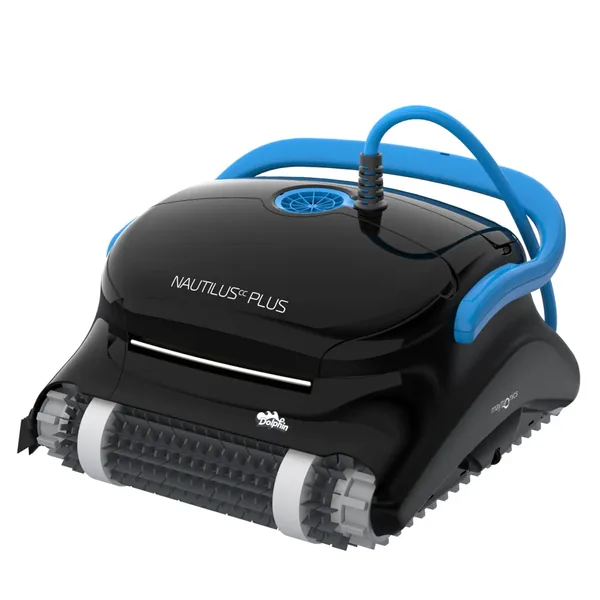
Dolphin Nautilus CC Plus
Top-loading filter access means you don't flip the robot to clean it. Dual fine filters catch smaller particles so they don't reach the motor. Spare parts are widely stocked and reasonably priced.
Check Price on Amazon →Filter Deep-Cleaning: What Goes Beyond the Rinse
The post-run rinse covered above handles debris. But pool chemistry - chlorine, algaecides, phosphate removers, and pH adjusters - leaves residue on filter media that a water rinse doesn't remove. This chemical buildup reduces filtration efficiency over time and explains why filters that look clean sometimes perform like dirty ones.
Our team uses a filter soak protocol at the start and end of each season. Mix one cup of Poolife Equipment Cleaner (or the equivalent from any pool supply store - roughly $12 per bottle) in a 5-gallon bucket of water. Remove and fully submerge the filter cartridge for 8 hours. Rinse thoroughly with a hose. The cartridge comes out noticeably different - the pores open up and the filter media returns closer to its original white color. Suction is measurably stronger on the first post-soak run.
For fine-mesh filter bags (Dolphin and Polaris use these as their secondary filter stage), a gentle dish soap soak achieves the same result at lower cost. The key is thorough rinsing after - any soap residue in the pool will foam when the robot agitates the water. One 15-minute rinse under a garden hose is enough to clear it completely.
When a filter is beyond cleaning. A cartridge that's been used for two full seasons without chemical cleaning, or one that's been stored damp, develops permanent degradation where the media fibers mat together. You can tell because water flow through the filter looks noticeably restricted even after soaking. At that point, a $25 to $45 replacement cartridge is the correct call - running degraded filter media allows fine particles to recirculate into the pool water rather than being captured. The cost of keeping a pool chemically balanced with elevated fine particle load runs $30 to $60 in extra chemicals per month. New filter media is cheaper.