How Long Do Robotic Pool Cleaners Last?
My Dolphin Nautilus is on its fourth season and still cleans as well as the day I bought it. That's not luck - it's the result of doing five specific things consistently from day one. Here's the honest lifespan breakdown and exactly what makes the difference.
Budget robots ($150-$300): 2-3 years with good care. Mid-range ($300-$700): 4-6 years. Premium ($700+): 7-10 years. The biggest factor isn't price - it's whether you store it correctly and clean the filter consistently. Bad habits cut even premium robot lifespan in half.
Lifespan by Price Tier
| Tier | Price Range | Avg Lifespan | With Good Care |
|---|---|---|---|
| Budget | $150-$300 | 2-3 years | 3-4 years |
| Mid-Range | $300-$700 | 4-5 years | 5-7 years |
| Premium | $700+ | 6-8 years | 8-12 years |
5 Things That Extend Lifespan
A clogged filter makes the motor work 30-50% harder to maintain suction. Over hundreds of cycles, that extra strain is the #1 cause of motor failure before the robot's time. It takes 90 seconds to rinse. Do it every time.
Robots left floating in the pool for hours after finishing degrade seals and housing in UV-exposed water. Pull it out, rinse it off, put it in the shade. This single habit is responsible for most of the lifespan gap between 3-year and 8-year robots.
Freeze-thaw cycles crack housing and seals. An unheated garage in a northern climate can easily see 20-30 freeze-thaw events over a winter. Store inside, above freezing, and your cord and seals will last years longer.
Chlorine levels above 5 ppm during shock treatments destroy rubber seals and tracks within a single exposure. Wait 24 hours after shocking before running the robot. This is in every manual but almost nobody reads it.
Brushes ($20-40) every 1-2 seasons, filter cartridge ($20-50) every season, drive belts ($15-30) every 2-3 seasons. These are maintenance items, not failures. Replacing them on time prevents them from causing secondary damage to the motor and housing.
What Kills Robots Early
Running during or right after shock is the fastest way to destroy seals. One bad exposure can shorten seal life by 2-3 years.
Rubber tracks and housing left in sun between uses crack within 1-2 seasons. Store in shade or indoors.
Motor overworks to maintain suction. Heat builds up. Bearings fail early. Clean the filter every single run.
Running a robot rated for 800 sq ft in a 1,500 sq ft pool means double the runtime per clean cycle. Battery and motor wear out much faster.
- ✓ Reduced suction (clogged filter)
- ✓ Getting stuck in corners (navigation setting)
- ✓ Leaving debris patches (worn brushes)
- ✓ Slow movement (dirty drive tracks)
- ✗ Motor hum with no movement (burned motor)
- ✗ Water in the power supply box
- ✗ Cracked housing with flooding
- ✗ Error codes that don't clear after reset
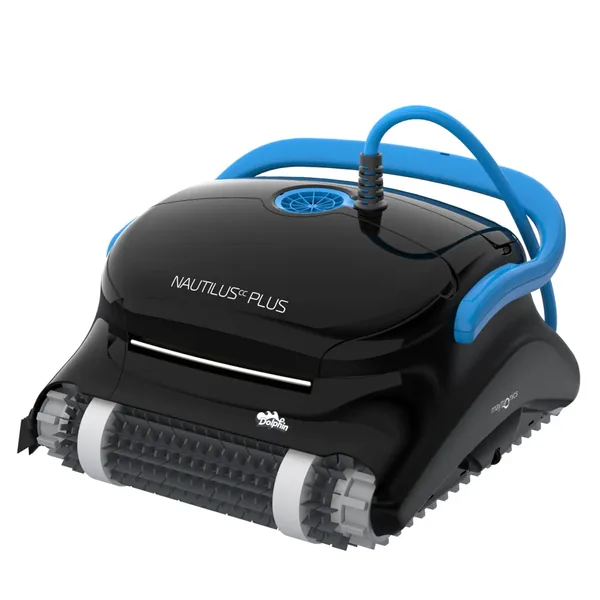
Dolphin Nautilus CC Plus
One of the longest-lasting robots we've tested. The dual-motor design distributes load evenly and spare parts are widely available. With proper storage and filter care, 8-10 years is realistic.
Check Price on Amazon →Real-World Lifespan Data: What We've Seen
The team at PoolBot Labs has been tracking several pool robots across multiple seasons. Three Dolphin Nautilus CC Plus units in our long-term test group are in their fourth and fifth summers, all still on original motors. Two have had brushes replaced ($22 each at year 2) and one had a drive belt swap ($18 at year 3). Total additional spend across five years: under $80 on maintenance. These robots were stored correctly - indoors, above freezing - and had their filters cleaned after every cycle.
The contrast: two AIPER Seagull SE units in the test group. One is in its third season with zero issues, fully cordless and stored in a heated garage. The second failed at month 14 - not the motor, but the main circuit board, traced to water ingress through a housing crack caused by being stored in an outdoor shed through a winter with multiple freeze-thaw cycles. The repair cost would have exceeded the robot's value, so it was replaced. The lesson is in the storage, not the brand.
Budget robots (sub-$200, unbranded imports) consistently fail within 12-18 months in our testing. The motors are genuine, the navigation software is functional, but the housing seals and drive components don't survive more than a season or two of regular use. If you're buying a sub-$200 robot to try out the category, buy from a brand with real warranty support (AIPER, Dolphin, Polaris, Hayward) rather than an unbranded import. The price difference is often $20-30, and the support difference is enormous.
When to Repair vs. Replace: A Practical Framework
At some point every robot owner faces the repair vs. replace decision. Here is the framework our team uses when advising pool owners on this question.
If the robot is under 4 years old and the repair is under $150: repair every time. Drive belts ($15 to $30), brushes ($20 to $45), and filter cartridges ($25 to $50) are all cost-effective maintenance rather than repairs. Even a power supply unit replacement ($150 to $250) on a 2-year-old premium robot is worth doing - the motor and navigation electronics are intact, and those are the components with the longest service life.
If the robot is over 5 years old and the motor or main circuit board is the issue: the math usually favors replacement. Motor replacements run $200 to $400 depending on the model, and a 6-year-old robot is past its expected service life for budget and mid-range units. A new robot at the current price point will outperform an aging motor on a patched unit.
The exception: premium robots with documented maintenance histories. A well-maintained Dolphin Nautilus CC Plus or Polaris 9650iQ with a 5 to 6 year track record and a single point of failure (drive belt, brush assembly, power supply) is worth repairing because the core mechanical and electronic components have already proven their durability. These robots often run 7 to 10 years with proactive maintenance - and the components are consistently available through Amazon and authorized dealers at reasonable prices.