How to Open Your Pool for Summer 2026 (The Robot Cleaner Changes Everything)
Pool opening used to take me an entire weekend. Now it takes Saturday morning. Here is the exact checklist I run every spring, and where the robot fits in the process.
The first time I opened my pool by myself I found a dead frog on the bottom, a winter's worth of leaf sediment coating every surface, and chemistry so far gone the water looked like a swamp. It took three days, two trips to the pool store, and an argument with my neighbor who insisted I was shocking it wrong. By the time it was swimmable I'd lost the first good weekend of May.
Now I do it in one morning. The difference is a robot pool cleaner and knowing the right order. This is the checklist I follow every year, updated for 2026, with the honest truth about where automation helps and where it doesn't.
When to Open Your Pool
The timing question trips up more first-timers than anything else. The rule I use: open when your overnight low temperature consistently stays above 60°F. In the South and Southwest that's often late March or early April. In the Northeast and Midwest, late April to mid-May. The Pacific Northwest varies wildly.
Opening too late is the bigger mistake. Warm water sitting under a cover with no circulation and no chlorine is a perfect algae incubator. I've seen pools turn completely green in two weeks of warm neglect. Open early, even if you're not swimming yet - the cost of preventive chemicals is a fraction of treating a full algae bloom.
The Opening Checklist: In Order
Order matters here. I've made the mistake of shocking before balancing alkalinity (the shock doesn't hold), and running the robot before chemistry was stable (clogs the filter with sediment that then reactivates). Do this in sequence.
📋 The Complete Pool Opening Checklist
Remove and clean the pool cover
Use a cover pump to remove standing water first. Drag it off in sections, clean it with a cover cleaner, and let it dry before folding for storage. Storing a wet cover is how you get mold that destroys it by next spring.
Remove winter plugs, reinstall fittings
Pull the plugs from your return jets, skimmer, and any other winterized fittings. Reinstall the eyeball fittings, skimmer baskets, and ladder anchors. Check O-rings on the pump lid while you're at it - a cracked O-ring at startup causes air leaks that are annoying to diagnose.
Fill to proper water level
Water should reach the middle of the skimmer opening - too low and you'll air-lock the pump, too high and skimming efficiency drops. Use your garden hose. This is also when I do a visual check of the pool walls for any winter damage before everything is in motion.
Reconnect and prime the pump
Hook up your filter, reconnect the pump, fill the pump basket with water before starting (priming), and turn on the system. Let it run for an hour before testing chemistry - you want the water circulating and mixed before you get accurate readings.
Test and adjust chemistry - in this order
Always adjust in this sequence: Total Alkalinity first (80–120 ppm), then pH (7.2–7.6), then Calcium Hardness (200–400 ppm), then shock with chlorine (raise to 5–10 ppm). Alkalinity buffers pH - if you adjust pH first without fixing alkalinity, it'll swing back overnight.
Shock the pool
Use a pool shock - calcium hypochlorite or a non-chlorine shock if your CYA is already high. Broadcast it around the perimeter at dusk (UV degrades unstabilized chlorine). Run the pump overnight. By morning you should see clarity improving. This is not optional - the water sitting dormant all winter needs a hard reset.
Run your robot cleaner - after chemistry is balanced
This is where the work you used to do by hand becomes automated. Wait until you can see the bottom clearly (usually 24–48 hours after shocking), then deploy the robot. The first run of the season will be the longest and most filter-clogging run of the year - that's normal. I empty the filter basket once mid-run on opening day.
Retest chemistry after the first robot run
The robot stirs up settled sediment and debris that can affect chemistry. Test again after it finishes and make any minor adjustments. At this point you're looking for: chlorine 1–3 ppm, pH 7.2–7.6, alkalinity 80–120. If it's all in range, you're done.
Why the Robot Makes Opening Day Actually Good
Before I owned a robot, opening day looked like this: remove cover, vacuum manually for two hours bent over the pool with a telescoping pole, brush the walls, skim the surface, collapse on a deck chair and question my life choices. The vacuuming alone took most of a Saturday morning - and the result was always imperfect because manual vacuuming stirs up sediment faster than you can remove it.
The robot changes this because it works systematically and at a pace that doesn't disturb the sediment the way a manual vacuum does. It maps the pool, runs methodical passes, and filters continuously. In the two-plus hours it takes to complete a full opening-day run, I have breakfast, do other yard work, and come back to a clean pool.
The other thing it does on opening day that's underrated: it filters out the fine particulate that makes water cloudy. My first opening season with a robot, the water went from murky to crystal in one day instead of the three it usually took. That's the filtration doing work the pump's main filter can't do as efficiently.
The Best Robot Cleaners for Opening Season
Opening day puts more load on a robot than any other run of the year. Heavy leaf debris, winter sediment, fine dust from sitting water, possibly some algae if the cover had gaps. The machines that handle this best have large filter baskets, strong suction, and full-pool coverage. Here's what I'd run.
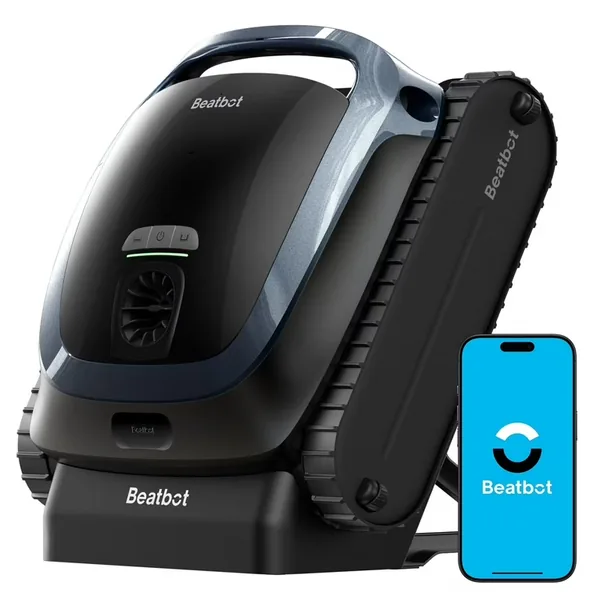
Beatbot AquaSense 2
AI-powered navigation that maps your pool before cleaning rather than bouncing randomly. On opening day, this matters - the AquaSense 2 methodically covers every section without retreading the same ground, which means less time to complete a thorough first clean. Large debris basket, strong suction for heavy sediment, cleans floor, walls, and waterline.
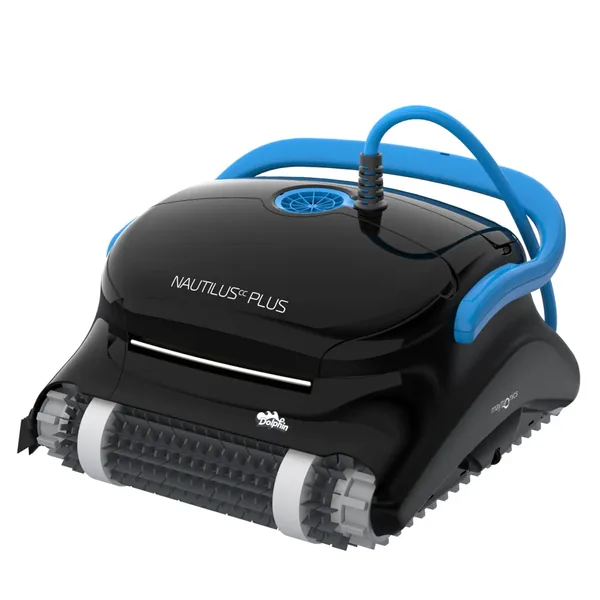
Dolphin Nautilus CC Plus
The CC Plus has been one of the most-recommended in-ground pool robots for years because it's simply reliable. The dual scrubbing brushes are particularly effective on opening day for breaking up the compacted sediment layer that settles over winter. XL filter basket holds more debris per run, reducing mid-run basket empties on your first clean.
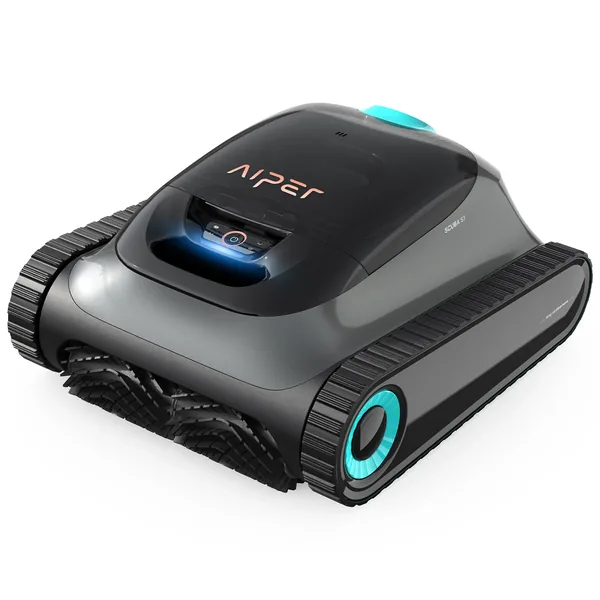
AIPER Scuba S1
Strong suction for the price, handles moderate opening-day debris loads well. Corded with a 60ft cable, so it works on most standard in-ground pools without tangling. Dual-drive motors provide better wall-climbing than budget single-motor designs. A solid choice if you want strong performance without going to the $849 tier.
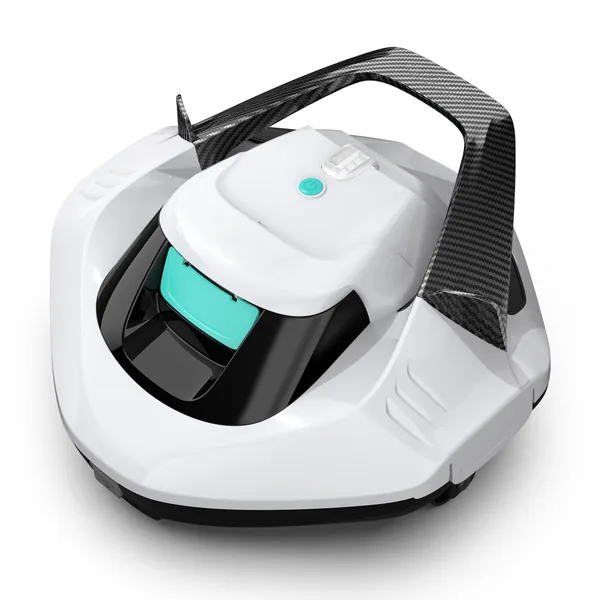
AIPER Seagull SE
The entry point to robot pool cleaning and a legitimate one. For above-ground pools or in-ground pools with a lighter winter debris load, the Seagull SE gets the job done at a price that makes the first-season investment obvious. Cordless (rechargeable battery), simple operation, no setup complexity. If you've never used a robot and want to see what the fuss is about, this is where to start.
The Opening-Day Robot Mistake Almost Everyone Makes
Running the robot before chemistry is balanced. I've done it. Most people do it once.
The problem: if your pH is off (which it will be after a winter), the slightly corrosive or scaling water conditions affect the robot's brush performance and can leave a residue on filter cartridges that reduces their effectiveness. More practically, if you run the robot in very cloudy water, it can't navigate accurately - some models use optical sensors that lose effectiveness when visibility is low. You get incomplete coverage on the worst debris day of the year.
Wait the 24–48 hours. Shock, let the filter run overnight, then deploy the robot in water you can actually see through. The first run will still catch more debris than any other run of the year - that's fine. Just let the chemistry do its job first.
What the Robot Can't Do at Opening
This is important to be honest about, because people expect too much from robot cleaners at opening time and then feel let down.
It can't balance your chemistry. A robot filters physical debris; it has nothing to do with pH, chlorine, or alkalinity. You still need to test and balance manually.
It can't remove algae alone. If you open to a green pool, shock first. The robot filters dead algae efficiently once you've killed it with chlorine - but it can't kill algae itself. Trying to run a robot in an actively algae-affected pool just clogs the filter quickly and does half a job.
It won't get every corner of every pool. Tight Roman steps, tanning ledges, and zero-entry designs can trip up robots that aren't designed for them. For most standard pool shapes, coverage is excellent. For complex geometry, expect to hand-brush corners once per season.
How Many Runs Before It's Truly Clean?
One full run for a pool that had a good winter cover and moderate debris. Two runs for heavier accumulation - I run it the first day, let the filter clear overnight, then run it again the next morning. The second run catches everything the first run stirred up and left in suspension.
After that, the pool is in maintenance mode. Weekly or twice-weekly runs from May through September keep it consistently clean with minimal effort. That's the whole point - opening day resets the pool, and the robot makes maintenance effortless from there.
Opening Season Comparison: Robot Picks at a Glance
| Robot | Price | Best For | Debris Load | Wall Cleaning |
|---|---|---|---|---|
| Beatbot AquaSense 2 | $849 | In-ground, all shapes | Heavy ✓✓✓ | Floor + walls + waterline |
| Dolphin Nautilus CC Plus | $849.99 | In-ground up to 50ft | Heavy ✓✓✓ | Floor + walls + waterline |
| AIPER Scuba S1 | $549.98 | In-ground, mid budget | Moderate ✓✓ | Floor + walls |
| AIPER Seagull SE | $149.98 | Above ground / small | Light–Moderate ✓ | Floor only |
FAQ: Pool Opening Questions
When should I open my pool for summer?
When overnight temps consistently stay above 60°F. In the South, often late March. In the Northeast, late April to May. Opening early costs you some chemicals but prevents an algae problem. Opening late costs you significantly more to fix.
Can I run the robot right after removing the cover?
Not immediately. Balance your chemistry and shock the pool first. Wait 24–48 hours for the water to clear before running the robot. In very cloudy water, the robot's navigation sensors are impaired and coverage is incomplete. Let the chemistry do its job first.
My pool opened green. Does the robot help?
Shock first, then yes. Algae needs to be killed chemically before the robot can remove it. Once you've shocked the pool and the algae is dead (the water will turn from green to cloudy grey/white), run the robot to vacuum up the dead cells. It's excellent at this - much better than manual vacuuming for fine particles.
How long does the first robot run of the season take?
Longer than normal. Most robots run 2–3 hours per cycle. Opening day often requires two full cycles - one to do the main clean, and a second run after the filter has cleared the water a bit more. Total time: 4–6 hours, but it's automated. You're not standing there.