7 Mistakes to Avoid When Buying a Robot Pool Cleaner
The cord is too short. The robot won't climb your walls. The filter jams every weekend. These are the mistakes pool owners make before they do the research - so you don't have to make them too.
There is no shortage of "best robot pool cleaner" lists on the internet. Almost all of them will tell you what to buy. Very few will tell you what can go wrong once it arrives. This article is for the second group.
We've tested dozens of robot cleaners, read thousands of real owner reviews on Amazon and Reddit, and talked to people who've returned a robot and bought a different one. These are the patterns we keep seeing. Learn from them before you spend $500 or more on a machine that turns out to be the wrong fit.
Buying Without Measuring Your Pool
This one sounds obvious. It is not obvious enough, because it's the single most common complaint in 1-star robot pool cleaner reviews. "It doesn't reach the far end." "The cord is too short." "It misses the steps near the deep end."
Every robot cleaner has a maximum pool length rating. The Dolphin Nautilus CC Plus is rated for pools up to 50 feet. If your pool is 52 feet? You're going to spend the summer pulling a stuck robot away from the wall. If it's 55 feet? It might not make it back to the charging station at all.
Before you click anything, get a tape measure. Measure the longest diagonal of your pool - corner to corner, not side to side. That's the path the robot will actually travel. Give yourself 5 feet of headroom beyond your measurement when choosing a model.
Ignoring the Wall-Climbing Spec
Not all robots climb walls. Some only clean the floor. Some climb partway. Some go all the way up to the waterline. This matters enormously - and which one you need depends entirely on your pool.
If you have a vinyl liner pool with smooth walls, a floor-only robot might be fine. Algae grows on floors first. But if you have a plaster or fiberglass pool, or if you get frequent scum lines at the waterline? A robot that only does the floor is going to leave your walls looking terrible within a few weeks.
The best robots - like the Beatbot AquaSense 2 Ultra and AquaSense 2 Pro - do floor, walls, and waterline in one pass. If your pool walls need attention, don't settle for a floor-only model no matter how cheap it is.
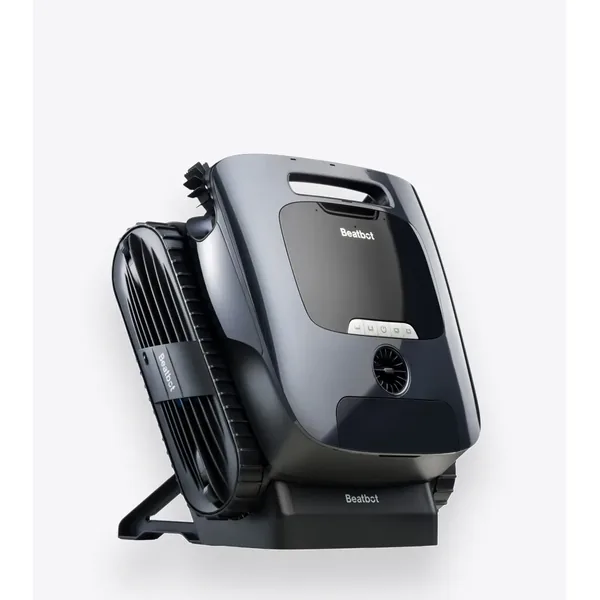
Beatbot AquaSense 2 Ultra
Floor, walls, and waterline. App scheduling, smart navigation, and powerful filtration. Great for pool owners who want complete cleaning in one session.
Confusing Cheap with Value
There is a pile of $200–$350 robot pool cleaners on Amazon. Some of them are fine. Most of them are not. And the pattern with the bad ones is consistent: they work great for 4 months, then the drive motor starts struggling, the impeller gets gunky, and the brushes start slipping off the track. By the end of the first season you're looking at a $150 repair bill or a new unit.
The sweet spot for real value is the $500–$800 range. The Dolphin Nautilus CC Plus has hundreds of thousands of verified reviews and a 2-year warranty. The Dolphin Nautilus EON 100 is where I'd start if I wanted to spend less without gambling on quality.
I'm not saying cheap ones are always bad. I'm saying: at $250, you are not buying a robot pool cleaner. You are renting one for a season.
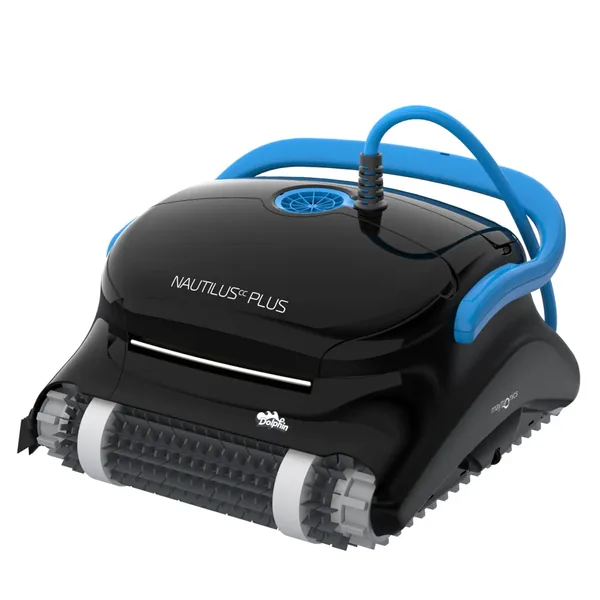
Dolphin Nautilus CC Plus
One of the most reviewed and most trusted pool robots on the market. Consistent, reliable, and backed by a solid warranty. The benchmark for the category.
Not Thinking About the Filter System
This is the one that catches people after the purchase. Every robot pool cleaner has a filter - a basket, a cartridge, or a bag - that fills up with debris. How often you need to clean it and how easy that process is varies enormously by model.
If you have a lot of trees near your pool - leaves, pods, pine needles - you'll be cleaning that filter after almost every run. Some filters empty in 30 seconds (top-load basket designs are the best for this). Others require disassembly. If you're dealing with fine debris like pollen or sand, you want a robot with a fine-mesh cartridge option - a standard basket will let the fine stuff pass right through.
Before you buy, search "[model name] filter cleaning" on YouTube. Watch the video. If that looks like something you'd skip, find a different model. The filter is the one maintenance step you can't automate, so make sure it's a task you'll actually do.
Leaving It in the Pool Between Uses
This one feels counterintuitive. You bought a robot for convenience. Why would you take it out of the pool when it's done?
Because UV exposure and continuous chemical contact will destroy the rubber seals, brushes, and cable insulation far faster than they should. Most manufacturers explicitly say not to leave the robot in the pool between cleaning cycles. The ones who don't say it are the ones you're calling for warranty claims in year two.
Every good robot comes with a caddy or a hook to hang it on. Use it. Run the cycle, pull the robot, rinse it with fresh water, and hang it in the shade. It takes two minutes. It will add years to the robot's life.
Buying a Corded Robot When You Needed Cordless
Most robot pool cleaners use a cable - they're plugged into a power supply unit that sits poolside while the robot works. For most pools, this is completely fine. The cable is designed to swivel and not tangle... usually.
But if your pool has a lot of features - a spa attached, a sunken section, multiple sets of steps, irregular walls - the cable will fight you. It snags on steps, wraps around features, and lifts the robot off the surface at the worst moment. For these pools, a cordless robot is worth the premium.
The AIPER Seagull SE is one of the best cordless options - battery-powered, no cable to manage, and genuinely good on complex pool shapes. It runs on a charge and navigates without anything to snag on.
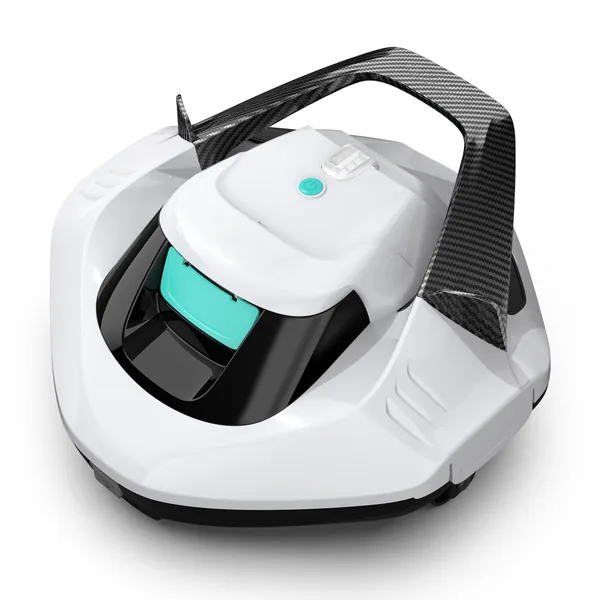
AIPER Seagull SE
No cord, no tangle, no problem. Ideal for pools with spas, steps, irregular features, or any layout where a cable would snag. Runs on a rechargeable battery and delivers excellent floor-and-wall coverage.
Expecting It to Fix a Green Pool
This might be the most important one. A robot pool cleaner is a maintenance tool, not a remediation tool. It keeps a clean pool clean. It is not designed to rescue a pool that's gone green.
If your pool has algae - even a light green tint - do not drop the robot in. Algae blooms mean something is off with your chemistry. Until you balance the water, shock the pool, run the filter, and get things back to normal, the robot will just push algae slime around and potentially clog its filter in one run. Some algae can also damage the robot's rubber components if the chemical concentration is way off.
Fix the water first. Give it 24–48 hours. Test until the chemistry is correct. Then run the robot. In that order, every time.
The Right Robot for the Right Pool
If you've read this far, you're doing it right. You're researching before buying, not after. Here's where I'd send most people to start:
- Standard inground pool, budget-conscious: Dolphin Nautilus EON 100
- Standard inground pool, best value overall: Dolphin Nautilus CC Plus
- Want wall and waterline coverage: Beatbot AquaSense 2 Ultra
- Complex pool or lots of features: AIPER Seagull SE - cordless, no tangle risk
- Large pool, want the best: Beatbot AquaSense 2 Pro ($849)
Avoid the mistakes above, match the robot to your actual pool, and you'll wonder why you waited so long.