Best Robot Pool Cleaner for Vinyl Liner Pools (2026): Safe Picks Only
My first robot had nylon bristle brushes rated for concrete. I ran it in my vinyl-lined inground pool for one season and noticed fine scratching along the floor seams by spring. The liner was only three years old. After talking to a pool tech, the diagnosis was clear: wrong brush type, too much suction for a liner that thin. Here's what I know now.
The AIPER Seagull SE is the top pick for most vinyl liner pools: soft dual-motor suction, foam-padded contact points, no hard edges, and cordless so no cord drag against the liner. For inground vinyl with walls to clean, the Dolphin Escape handles walls safely with PVA foam brushes. What to avoid: nylon bristle brushes, 1,000W+ suction motors, and robots over 15 lbs on thin above-ground liners.
Why Vinyl Liners Need Different Robots
Vinyl liner pools look like concrete pools on the surface, but they're structurally very different. The liner is typically 20-30 mil thick vinyl stretched over a steel or polymer frame. It's not solid. It flexes. And most robots are designed for concrete or fiberglass surfaces, not for something that can be scratched, punctured, or pulled away from the wall.
| Factor | Concrete/Gunite | Vinyl Liner |
|---|---|---|
| Surface hardness | Very hard, rough texture | Soft, smooth, scratchable |
| Brush type needed | Nylon (stiff) OK | PVA foam or rubber only |
| Suction sensitivity | Not an issue | High suction can pin liner to floor |
| Robot weight limit | No practical limit | Under 15 lbs preferred |
| Wall climbing | Hard tracks OK | Rubber tracks or skip walls |
The 4 Things That Actually Damage Vinyl Liners
Stiff nylon bristles are designed to scrub porous concrete. Against smooth vinyl, they act like sandpaper over repeated cycles. The damage is cumulative and not always visible until year two or three.
Robots with suction ports drawing 1,000W+ can create a strong enough vacuum seal against a 20-mil liner to pull it away from the wall bead track, especially at the waterline and steps. Once a liner pulls off the track, it rarely goes back perfectly.
Above-ground vinyl liners have bottom seams where panels meet. Robots over 18 lbs repeatedly crossing those seams stress the weld points. On liners older than 5 years this can accelerate seam separation.
Some corded robots have exposed chassis edges that scrape the liner when the robot changes direction. A robot with rounded, rubber-bumpered edges is a fundamentally safer choice.
Many robots marketed for inground pools claim "vinyl liner compatible" but are tested on thick 30-mil inground liners, not the 20-mil liners common in above-ground pools. If you have an above-ground vinyl pool, be especially careful - the specs that matter most are brush type and weight, not just the compatibility label.
The 4 Robots That Are Actually Safe for Vinyl
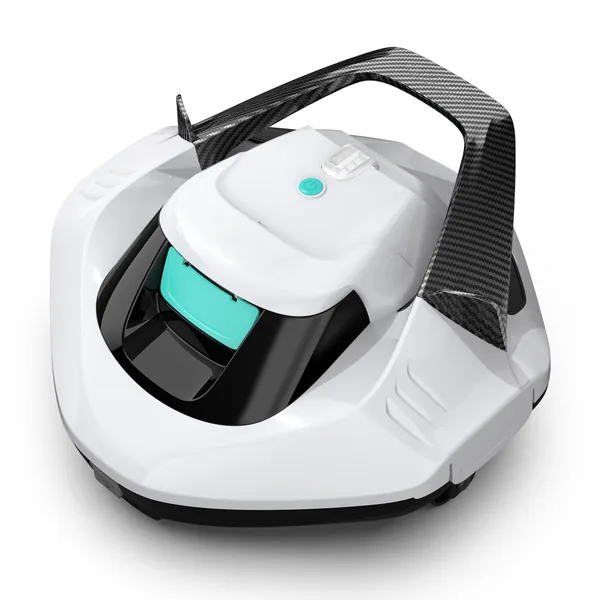
AIPER Seagull SE
Everything about the Seagull SE is built for soft-surface pools. The dual-motor system moves independently, so it doesn't drag. The brushes are soft foam, not nylon. At 7.7 lbs it's light enough that it won't stress seams on older above-ground liners. Cordless means no cord dragging against the wall bead. I switched to this after my liner damage incident and haven't had a single issue in two seasons. It handles the floor thoroughly, climbs walls on flat-sided above-ground frames, and the auto-park feature means it isn't sitting against the liner at full suction when done.
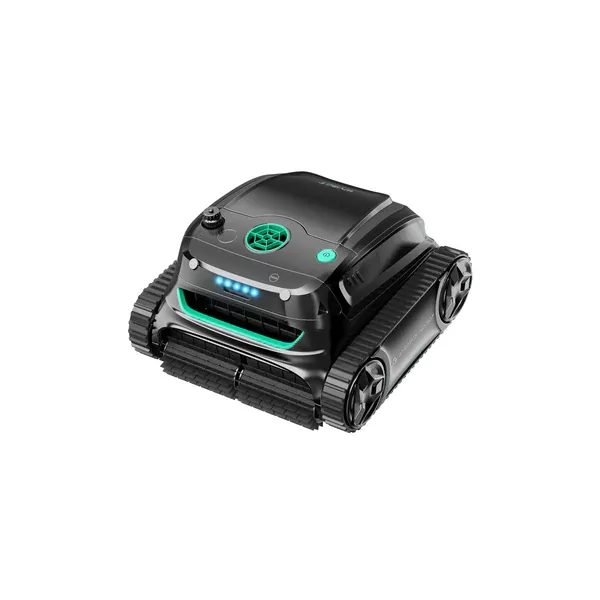
Wybot S2
A premium cordless option that's genuinely safe for vinyl. It's floor-only (no wall cleaning), and the navigation is random-pattern so it takes longer to get full coverage. Weighs 6.2 lbs, so it won't stress seams on older above-ground liners. The suction is gentle enough that it's never going to stress a liner. Honest caveat: on pools over 600 sq ft you'll need two runs to cover everything.
Check Price on Amazon →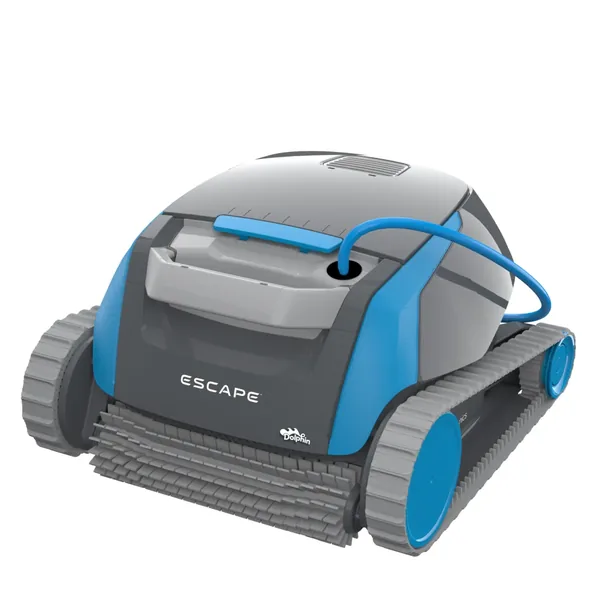
Dolphin Escape
If you have an inground vinyl liner pool and want a corded robot, the Dolphin Escape is the safe choice. PVA foam brushes only, no nylon, and Dolphin specifically rates it for vinyl liner pools. It's floor-only (no wall cleaning), which limits the risk of suction-related liner pull at the walls. The dual scrubbing brushes do a thorough job on the floor and the filter cartridge handles fine debris well. At 14.7 lbs it's acceptable for inground liners, though I'd still avoid it on thin above-ground vinyl.
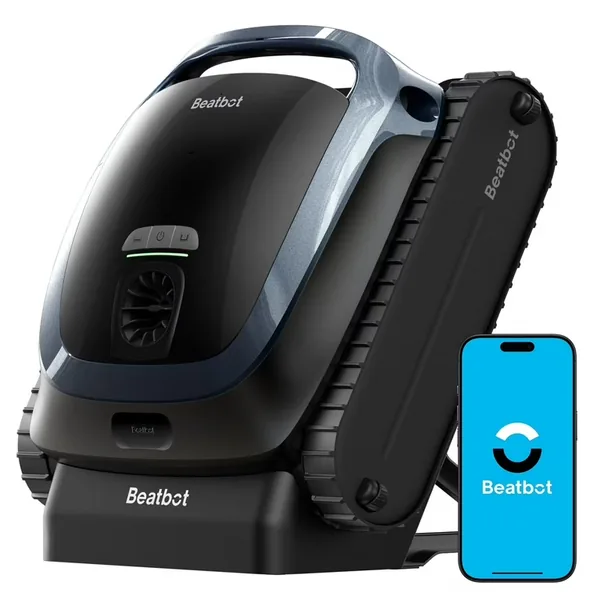
Beatbot AquaSense 2
For inground vinyl liner pools where you also want wall and waterline cleaning, the AquaSense 2 is the only premium cordless option I trust on vinyl. The brushes are soft, the chassis has rubber contact points, and the navigation is systematic enough that it doesn't scrub the same spot repeatedly. At $849 it's a significant buy, but for a 15,000-gallon inground vinyl pool where you care about liner longevity, it makes more sense than running a harsh corded robot for another season.
Check Price on Amazon →Side-by-Side: Vinyl Liner Safety Specs
| Robot | Brush Type | Weight | Walls | Cordless | Price |
|---|---|---|---|---|---|
| AIPER Seagull SE | Soft foam | 7.7 lbs | Yes | Yes | ~$150 |
| Wybot S2 | Soft brush | 6.2 lbs | No | Yes | $1,599.98 |
| Dolphin Escape | PVA foam | 14.7 lbs | No | Corded | ~$299 |
| Beatbot AquaSense 2 | Soft rubber | 10.8 lbs | Yes | Yes | ~$849 |
| Typical concrete robot | Stiff nylon | 15-22 lbs | Varies | Usually not | Varies |
What to Avoid in Vinyl Liner Pools
- Any robot with stiff nylon bristle brushes
- Robots over 20 lbs in above-ground pools
- Suction-side cleaners (they stress liner at the port)
- Robots with exposed metal chassis edges
- In-ground concrete robots without checking brush type
- PVA foam or rubber brushes confirmed in specs
- Under 12 lbs for above-ground vinyl
- Rubber-bumpered chassis, no hard exposed edges
- Cordless preferred (no cord drag on liner)
- Auto-stop or auto-park so it's not idling at full suction
Vinyl liners typically last 10-15 years. A liner in years 8-12 is thinner, more brittle in cold water, and more vulnerable to suction stress. If your liner is more than 8 years old, I'd stay with the AIPER Seagull SE or Wybot S2 and avoid any corded robot regardless of how "vinyl safe" the marketing says it is.