Best Robot Pool Cleaner for Leaves and Debris (2026)
Two oak trees overhang the deep end. By Friday afternoon, you could lose a child in the leaf layer on the pool floor. Here's what actually works - and what clogs after one pass.
Most robot pool cleaner reviews test on clean pools. They run the robot through 15 minutes of fine dust and call it good. That is not your pool if you have trees.
A pool with oak, pine, or maple trees overhead is dealing with a completely different challenge: wet, clumping leaves that fold themselves into filter screens, pine needles that jam impellers, and seed pods that slip under suction tracks. The wrong robot will clog in one run and spend the rest of the season sitting in a storage bag.
At PoolBotLab, we tested specifically for debris-heavy conditions. Here is what we found.
Why Leaves Are a Different Problem
Standard robot pool cleaners are designed around a specific enemy: fine particulate. Sand, algae spores, dirt, pollen. They use cartridge filters with small mesh and moderate suction, which is exactly right for that kind of debris.
Leaves break that model in three ways.
First, volume. A good leaf fall can drop a few pounds of organic matter into your pool in a day. Fine-particulate robots have baskets sized for maybe a quarter of that before they need emptying. Run it for two hours in heavy leaf season and the basket is completely packed, suction drops to near zero, and the robot is just dragging itself across the bottom accomplishing nothing.
Second, clumping. Wet leaves do not sit loose in a basket. They mat together and seal against the filter screen, blocking airflow even when the basket is not technically full. A robot that looked fine after run one will clog solid halfway through run two because the packed mat from yesterday compressed and fused overnight.
Third, shape. Pine needles and seed pods are awkward for suction systems. They turn sideways, bridge across intake ports, and jam the impeller. One lodged acorn cap can drop suction by 40%. Some robots handle this fine; others stop dead.
What Specs Actually Matter for Leaf Pickup
When we evaluate a robot for leaf-heavy pools, here is what we look at - in order of importance.
1. Basket/Filter Capacity
Bigger basket means more debris per run before you need to clean. The difference between a 1.5-liter basket and a 4-liter basket is not a minor convenience upgrade. In peak leaf season, it is the difference between cleaning the filter once per run and cleaning it three times. Look for anything over 3 liters as a strong baseline for tree-heavy pools.
2. Dual-Filter Design (Fine + Coarse)
The best debris-handling robots use a two-stage approach: a coarse mesh layer catches leaves and large particles first, and a finer cartridge behind it catches the small stuff. This prevents leaves from blocking the fine filter and keeps suction consistent throughout the cycle. Single-filter robots with fine mesh only will choke on leaves no matter how big the basket.
3. Top-Load Access
This is not about cleaning efficiency. It is about whether you will actually empty the filter when you should. Top-load filter access takes 30 seconds: pop the top, pull the basket, shake it out over a trash bag, drop it back in. Bottom or side access requires flipping the robot, dealing with wet debris falling everywhere, reassembling while kneeling on concrete. If the process is annoying, people skip it. Then the robot clogs and they blame the robot.
4. Suction Motor Power
Raw wattage matters less than how a motor maintains suction under load. Some robots drop sharply as the basket fills; others maintain consistent pull until the basket is nearly full. Read the one-star reviews on Amazon: if people keep mentioning "loses suction quickly," that is a motor-under-load issue, not a user error.
5. Brush Type
Rubber brushes move more debris than foam brushes in leaf conditions. They are stiffer, create better suction contact with the pool surface, and do not trap fine debris in their pores the way foam does. If you have a vinyl liner, check for rubber brushes that are specifically rated as liner-safe.
Our Top Picks for Leaf-Heavy Pools
We organized these by use case. Heavy leaf load, budget-conscious, large pools, and above-ground pools all have different right answers.
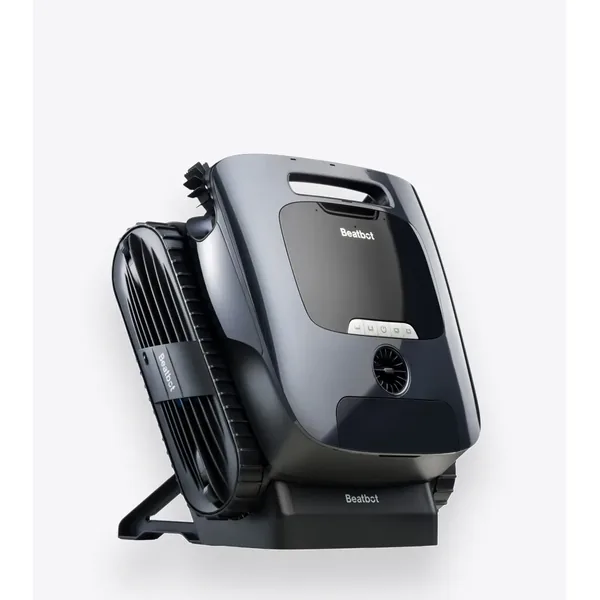
Beatbot AquaSense 2 Ultra
The AquaSense 2 Ultra has the largest debris basket in its class and a dual-stage filtration system that handles leaves, pods, and pine needles without clogging mid-run. The top-load filter access is genuinely fast. It also climbs walls and cleans the waterline, so leaves that float up and deposit a scum ring at the tile are handled in the same cycle. App control lets you schedule it to run before you wake up, so the pool is clean by morning every day during fall season.
If your pool has multiple trees nearby and leaf fall is a serious seasonal problem, this is the robot we'd pick. It is not cheap, but the cost of dealing with a clogged, underperforming robot on a daily basis adds up fast in time and frustration. The Ultra handles it and moves on.
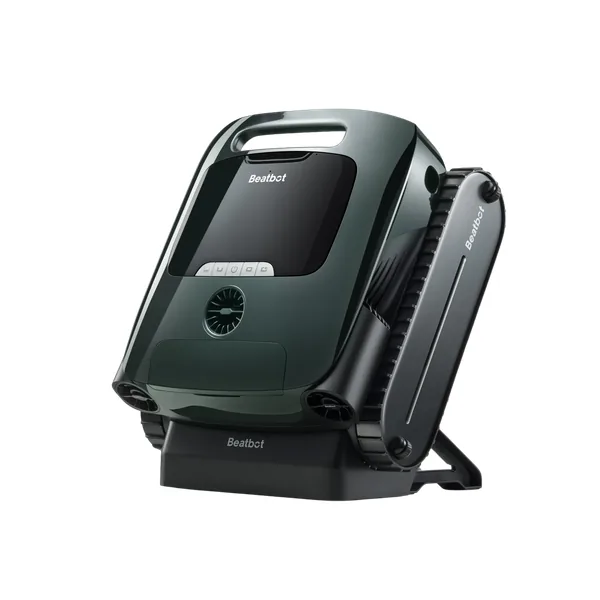
Beatbot AquaSense 2 Pro
The Pro sits between the Ultra and the base AquaSense 2 in Beatbot's lineup. It shares the same top-load filter design and dual-stage filtration, handles walls and the waterline, and has strong suction that stays consistent as the basket fills. At roughly a third of the Ultra's price, it is the sweet spot for pools with serious but not extreme leaf loads. For most tree-surrounded pools, this is the right answer.
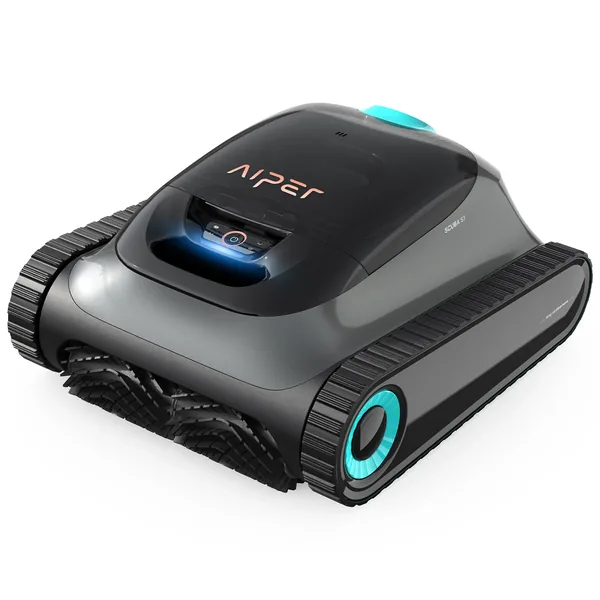
AIPER Scuba S1
AIPER's Scuba S1 is a genuinely capable mid-range robot with solid debris handling for pools that have some leaf exposure but are not buried in trees. The top-load filter makes maintenance quick, suction holds up well through a standard run, and the wall-climbing is reliable. It does not have the basket capacity of the Beatbot options above, so in very heavy leaf season you will be cleaning the filter more often. For pools with a couple of trees nearby rather than a full canopy overhead, this is a solid call at a lower price.
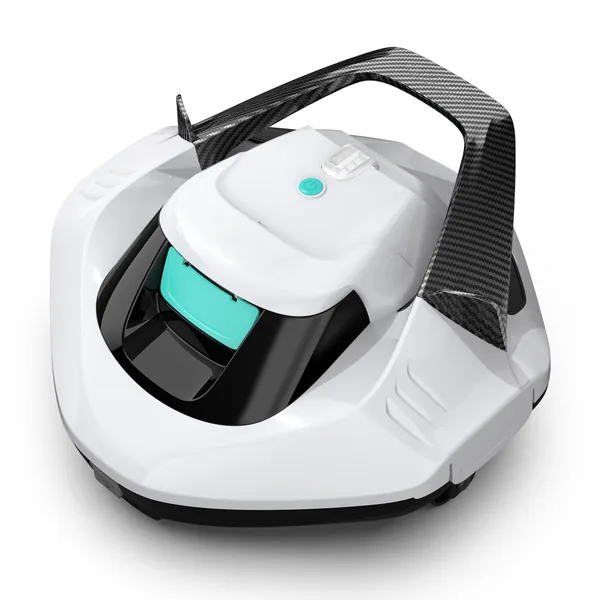
AIPER Seagull SE
For above-ground pool owners dealing with moderate leaf fall, the Seagull SE is the easiest robot to use and maintain. No cord to manage, no power supply to position poolside. It runs on a rechargeable battery, covers the floor well, and has a straightforward filter you can rinse in 60 seconds. It is not the right robot for a pool buried in oak trees - the basket is smaller and it does not do walls. But for the Intex pool under the maple tree that needs a quick weekly cleanup, this is the right size and right price.
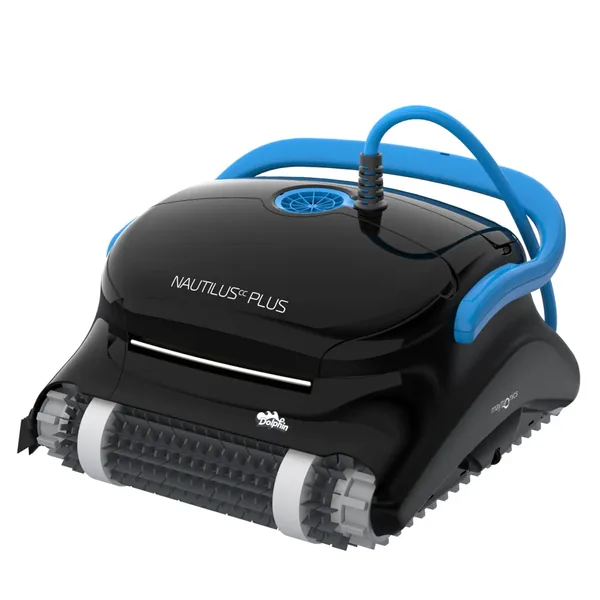
Dolphin Nautilus CC Plus
The Nautilus CC Plus is not specifically engineered for heavy leaf loads, but it has been around long enough that there are thousands of verified reviews from real tree-pool owners. It holds up well for moderate debris, the top-load cartridge is easy to clean, and the 2-year warranty means you have a fallback if something goes wrong. If the Beatbot options are out of budget and you want a robot you can trust for a few years, this is still one of the most reliable options in the category at this price.
Keeping Your Filter From Clogging Every Run
The robot matters, but so does how you use it. In leaf season, the filter is the limiting factor on almost every robot. Here is what makes the difference between a 90-minute clean run and a 30-minute clog.
Run it more often, not less
When leaves are falling heavily, running the robot every day is better than every three days. A daily run means the debris load per cycle stays manageable. Every-three-days means the robot is trying to move a pile, the basket fills halfway through, and you get an incomplete clean plus a clogged filter. Short, frequent runs beat long, rare ones in leaf season.
Clean the basket every single time
Even if it does not look full. Wet leaves compact. What looks like 60% full after a run will be 90% compacted by the next morning. Rinse the basket with fresh water after every cycle. It takes two minutes and it is the single highest-impact maintenance step you can do for leaf performance.
Skim first when the leaf load is extreme
If there is a thick layer of floating leaves on the surface, skim the pool manually before running the robot. A robot cannot handle floating leaves: it works the floor and walls, so surface debris just gets driven around by the water movement. Five minutes of skimming means the robot can do its actual job when you drop it in.
Check the impeller once a season
Pine needles, seed pods, and small twigs are the most likely things to jam an impeller. If your robot suddenly loses suction mid-season without an obvious filter clog, the impeller is the first place to check. Most models give you access to it with a screwdriver. Clear it out, run the robot for five minutes, and check suction again before assuming something is broken.
Bottom Line
The Short Version
- Heavy tree cover, inground pool: Beatbot AquaSense 2 Ultra - best debris capacity and waterline cleaning
- Tree-heavy pool, want better value: Beatbot AquaSense 2 Pro - same top-load system, lower price
- A few trees, moderate debris: AIPER Scuba S1 - solid mid-range with top-load access
- Above-ground pool with some leaf exposure: AIPER Seagull SE - cordless, simple, right-sized
- Want something battle-tested: Dolphin Nautilus CC Plus - proven, warrantied, reliable
The pattern with leaf-related returns is almost always the same: someone bought a robot designed for a clean pool and expected it to handle a debris-heavy situation. The robot clogged, the owner got frustrated, and a perfectly good robot ended up on a return truck.
Match the robot to your actual debris load. If you have trees over your pool, the debris capacity and filter design matter more than app features or smart navigation. Get those two things right and the robot earns its keep every single day of the season.