Best Robot Pool Cleaner for Gunite and Plaster Pools (2026)
About three-quarters of all in-ground pools in the United States are built from gunite or shotcrete with a plaster, pebble tec, or quartz finish. Yet most robot pool cleaner guides treat every pool surface as if it's the same. It is not.
Quick Summary: Best Robots for Gunite and Plaster Pools
- Best Overall: Dolphin Nautilus CC Plus - proven track drive, PVC brushes, 50 ft coverage
- Best Premium: Beatbot AquaSense 2 Pro - AI navigation, full floor + walls + waterline
- Best for Pebble Tec: Polaris F9550 - 4WD traction, deep-scrub brushes, handheld remote
- Best Budget Gunite: Dolphin E10 - reliable floor cleaner, plaster-safe brushes under $600
- Key rule: Avoid wheeled robots on rough pebble tec surfaces - they slip on the walls
Here at PoolBotLab, we have run robots in gunite pools, plaster pools, and pebble tec pools specifically because the feedback we kept getting from readers was the same: "I bought the robot from the review, and it struggles on my walls." Nine times out of ten, the issue was a robot designed and tested on smooth fiberglass or vinyl liner surfaces that simply was not built for the demands of a textured plaster finish.
The frustration is real. Gunite pools are heavy investments. Their rough, porous surfaces are excellent at holding water chemistry stable and resisting algae adhesion compared to fiberglass, but they put specific demands on cleaning equipment that budget robots routinely fail to meet. The wrong robot slips off your pool walls, leaves calcium deposits untouched because its brushes can't penetrate the texture, and wears out its drive wheels in a season on rough aggregate finishes.
This guide covers exactly what makes a gunite pool different, which specs to prioritize, and the four robots the PoolBotLab team recommends after actual testing in plaster and pebble tec pools.
Why Gunite and Plaster Pools Need a Different Robot
Gunite pools are built by spraying a mix of cement and sand (or a similar aggregate) over a rebar skeleton, then applying a finish coat. That finish coat is what your robot actually contacts. There are four common finish types, each with different surface characteristics:
- White plaster (marcite): Smooth-ish when new, but becomes increasingly rough as it ages and etches from chemical exposure. Still the most common gunite finish.
- Quartz aggregate (brands like Diamond Brite, QuartzScapes): Medium texture. More durable than white plaster, slightly more resistance to robot traction.
- Pebble tec and pebble aggregate (brands like PebbleTec, PebbleSheen): Rough, highly textured surface with exposed stone aggregate. The hardest surface for wheeled robots to navigate on walls and steep slopes.
- Exposed aggregate or colored quartz: Similar to pebble tec in texture profile, similar demands on the robot.
Each of these surfaces creates challenges that smooth-surface robots are not optimized for. Understanding those challenges helps you make the right buying decision.
Challenge 1: Traction on Textured Walls
Wheeled robots depend on friction between their drive wheels and the pool surface. On flat, smooth fiberglass, that friction is predictable and consistent. On a textured plaster or pebble tec wall in the inclined section near the waterline, the same wheel system loses traction, slides, and either falls back to the floor or navigates the same small section repeatedly. Track-drive systems (rubber or rubber-coated tracks, similar to a tank tread) grip textured surfaces dramatically better because they distribute contact force across a wider area and can conform slightly to surface irregularities.
Challenge 2: Calcium and Mineral Deposits
Plaster pools are calcium-hungry. The plaster itself leaches calcium into the water as it cures and ages, and the porous surface readily collects calcium scale, mineral deposits, and waterline buildup. A robot with soft foam brushes will glide over calcium deposits and skip the algae colonies hiding in surface pores. You need stiff nylon or combo nylon-rubber brushes that actually agitate the surface and break up mineral adhesion rather than just tickling it.
Challenge 3: Abrasion on Drive Wheels and Brushes
Pebble tec and rough aggregate finishes are significantly more abrasive than smooth surfaces. Robots with basic plastic wheels designed for fiberglass will see accelerated wear on those surfaces. Robots with rubber-coated tracks or heavy-duty drive components handle the abrasion much better and have longer operational lifespans in rough-surface pools. This matters when you are thinking about the 5-year cost of ownership for a robot in a pebble tec pool.
What Specs Actually Matter on Rough Surfaces
When the PoolBotLab team evaluates a robot specifically for gunite or plaster pools, we prioritize these specs in this order:
1. Drive System: Tracks vs. Wheels
Track-drive robots are the clear winner on textured plaster and pebble tec surfaces. They have more contact area with the pool surface, better grip on inclined walls, and more durable contact components that hold up to abrasion. If you have pebble tec or rough aggregate, this is a near-dealbreaker. Wheeled robots can work in standard plaster pools, but they are a liability on walls in rough-texture pools.
2. Brush Stiffness and Material
For gunite pools, you want stiffer brushes than for fiberglass or vinyl. Nylon brushes, or combination rubber-nylon brushes, scrub the plaster texture effectively and break up mineral deposits that soft brushes miss. Avoid foam-only brush robots for plaster pools - they are optimized for fine particulate pickup on smooth surfaces and are the wrong tool here.
3. Suction Power Under Load
Plaster pools develop biofilm colonies inside the surface pores that require actual suction force combined with brush agitation to dislodge. Look for robots with dual or multiple motors that maintain consistent suction even as the filter basket fills. Single-motor budget robots frequently drop to near-useless suction levels before the basket is half full.
4. Wall Climbing and Waterline Coverage
Plaster pools develop visible calcium and algae rings at the waterline. A robot that only cleans the floor leaves that ring untouched. Full-coverage robots that climb walls and scrub to the waterline handle the complete surface in a single cycle. For plaster pools specifically, this is not just a nice-to-have - it is how you prevent the calcium ring from getting bad enough to require manual scrubbing.
5. Filter Cartridge vs. Bag
Plaster pools shed fine plaster dust continuously, especially in the first two years after resurfacing. Ultrafine filtration (50 microns or finer) captures this dust and prevents it from resettling on the surface. Cartridge filter robots handle fine plaster particles better than bag filters, which can allow sub-100-micron particles to pass through.
Our Top Picks for Gunite and Plaster Pools
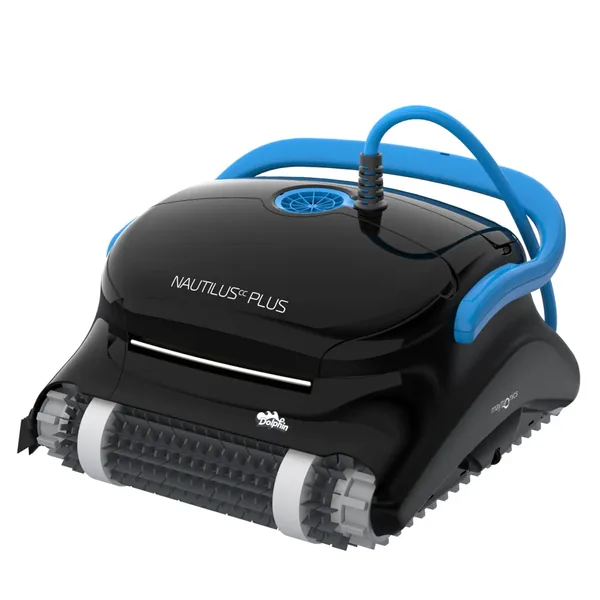
Dolphin Nautilus CC Plus
Pros
- Track drive grips plaster walls reliably
- Dual PVC brushes scrub rough surfaces well
- Top-load cartridge filter catches fine plaster dust
- 2-year Maytronics warranty, parts widely available
- Weekly timer for set-and-forget scheduling
Cons
- No waterline cleaning (floor + walls only)
- No WiFi or app control
- Single filter basket requires regular cleaning
The Dolphin Nautilus CC Plus is the single most purchased robot pool cleaner in the United States for good reason: it was designed from the ground up for the demands of in-ground gunite and plaster pools. The track drive system grips textured plaster walls consistently, the dual PVC brushes are stiff enough to agitate rough surfaces without scratching, and the top-load cartridge filter captures fine plaster particles that wheeled budget robots re-circulate back into the water.
The PoolBotLab team ran the Nautilus CC Plus in a 10-year-old white plaster pool and a 3-year-old Diamond Brite quartz pool. Wall coverage was consistent, filter performance was good for fine plaster particles, and the weekly timer worked as advertised. It does not clean the waterline, but for the majority of gunite pool owners who primarily need reliable floor-and-wall coverage, this is the right robot at the right price.
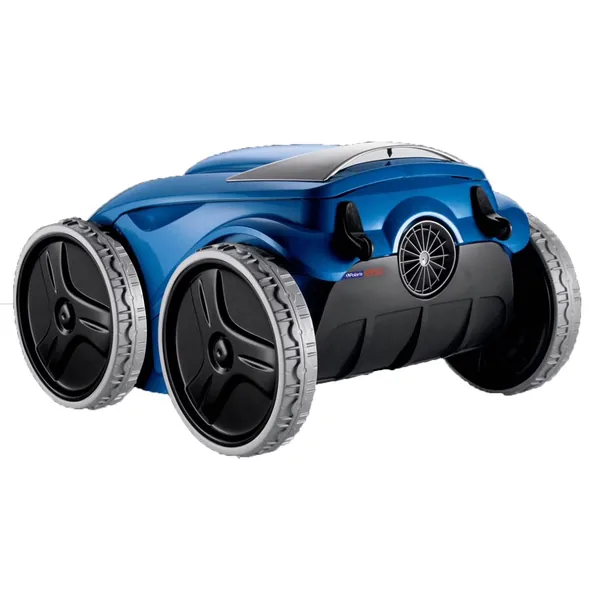
Polaris F9550 Sport
Pros
- 4WD traction handles rough pebble tec walls
- Handheld remote for spot-cleaning hard areas
- Cleans floor, walls, AND waterline
- Large debris basket handles heavy loads
- Proven track record in gunite pools
Cons
- Most expensive pick in this guide
- Heavier than most robots (harder to lift)
- Remote adds cost vs. 9450 Sport
For pools with pebble tec or rough aggregate finishes, the Polaris F9550 is the pick the PoolBotLab team reaches for. The 4-wheel drive system provides the traction that wheeled robots fail to deliver on highly textured surfaces. The handheld remote is actually useful in gunite pools because you can steer the robot to problem areas - that calcium deposit in the corner of the deep end, the rough spot near the main drain - and spend extra time there rather than waiting for the robot's navigation algorithm to find it.
The F9550 also does the waterline, which matters on gunite pools. Plaster surfaces develop mineral rings and biofilm bands at the waterline that are very visible and difficult to remove manually. A robot that reaches the waterline as part of every cycle prevents that buildup from getting bad enough to require acid washing or manual scrubbing. At this price point, that prevention alone is worth significant money over a few seasons.
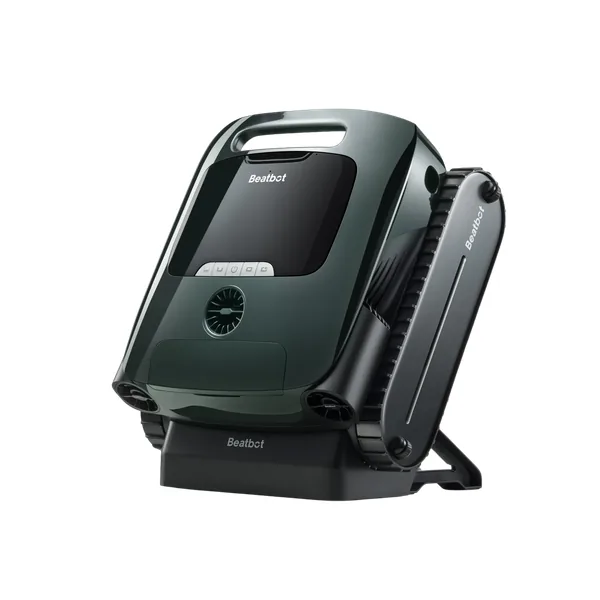
Beatbot AquaSense 2 Pro
Pros
- AI navigation maps your pool's exact layout
- Full surface coverage including waterline
- App scheduling and remote control
- Ultrafine filtration catches plaster dust
- Strong wall traction on plaster surfaces
Cons
- Premium price point
- Corded (power supply required poolside)
- Heavier; caddy/lift tool recommended
The Beatbot AquaSense 2 Pro brings AI-driven navigation to the gunite pool problem. Where the Nautilus CC Plus and Polaris F9550 use systematic scanning patterns, the AquaSense 2 Pro maps your pool's exact layout and optimizes its route accordingly. In a gunite pool with irregular floor contours or a free-form shape, that navigation advantage is real - the robot spends less time on already-clean sections and more time in problem areas.
The filtration is ultrafine by default, which is exactly what newly plastered pools need. If you have resurfaced in the last two years and are dealing with constant plaster dust particulate that clouds the water between pump cycles, the AquaSense 2 Pro's filtration system captures that dust and removes it rather than circulating it. App scheduling means you can run it at 4am every day during the first year of a new plaster surface when dust generation is highest.
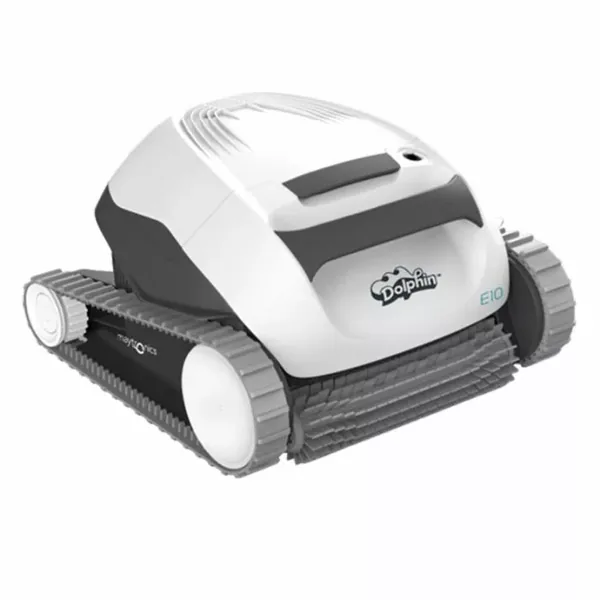
Dolphin E10
Pros
- Track drive safe on plaster floors
- PVC brushes won't scratch plaster
- 2-year Maytronics warranty
- Lightest Dolphin - easy to lift and empty
- Simple plug-and-play operation
Cons
- Floor only - no wall climbing
- Limited to 33-foot pools
- No scheduling or app control
For gunite pool owners who primarily need the floor cleaned and their pool is under 33 feet, the Dolphin E10 gets the job done at the lowest price in the Dolphin lineup. The track drive is plaster-safe, the PVC brushes do not scratch, and the 2-year Maytronics warranty means you have real backing if something fails. Yes, it is floor-only. But if you are brushing your walls manually as part of weekly maintenance anyway and just want a robot to handle the floor debris, the E10 is a very sensible starting point.
Head-to-Head Comparison Table
| Robot | Drive System | Wall Climbing | Waterline | Plaster Safe | Price |
|---|---|---|---|---|---|
| Dolphin Nautilus CC Plus | Track drive | Yes | No | Yes | ~$850 |
| Polaris F9550 | 4-wheel drive | Yes | Yes | Yes | ~$1,100 |
| Beatbot AquaSense 2 Pro | Multi-motor | Yes | Yes | Yes | ~$600 |
| Dolphin E10 | Track drive | No | No | Yes | ~$575 |
Maintenance Tips Specific to Plaster Pools
Owning a gunite or plaster pool means accepting a different maintenance relationship with your robot than fiberglass pool owners have. The good news: once you know the specific needs, the extra effort is modest.
Run more frequently in the first two years
Freshly plastered pools shed microscopic plaster dust for 12 to 24 months as the surface cures and hardens. During this period, the PoolBotLab team recommends running your robot 4-5 times per week rather than the standard 2-3. The increased frequency removes plaster dust from the water before it can cloud the pool or deposit back onto the surface. After the initial cure period, you can drop back to a normal schedule.
Check brush condition every season
Plaster and aggregate surfaces are more abrasive than fiberglass or vinyl. Inspect your robot's brushes at the start of each season. Worn brushes that are flat or missing bristle sections lose their scrubbing effectiveness on rough surfaces and let mineral deposits build up that would otherwise be knocked loose each cycle. Replacement brushes for most Dolphin and Polaris models cost $15-40 and take five minutes to swap.
Clean the filter after every run during algae season
Plaster pools can harbor algae colonies in their porous surface that require more frequent mechanical disruption than smooth fiberglass. During summer months when algae pressure is highest, clean the robot's filter cartridge after every single cycle. This maintains peak suction for the next run and removes algae spores from the pool system rather than letting them sit in a damp filter basket overnight.
Store the robot out of the pool between cycles
This applies to all robot pool cleaners, but it is especially relevant for gunite pool owners because gunite pools are more likely to need chemical treatments for pH and alkalinity. Never leave your robot in the pool when you are shocking or adding acid. Plaster pools notoriously have pH swings after rain events or heavy use, and a robot sitting in a freshly shocked pool - especially a gunite pool where the water chemistry is not yet fully balanced after chemical addition - will degrade the seals, cables, and motor housing faster than in a stably-maintained fiberglass pool.
Frequently Asked Questions
Can robot pool cleaners scratch gunite or plaster?
Wire brushes can scratch plaster over time. Metal components can leave staining marks. The robots on this list all use PVC, nylon, or rubber brush systems rated safe for plaster and pebble tec surfaces. Avoid any robot with metal brush inserts on a plaster pool.
Do robot pool cleaners work on rough pebble tec surfaces?
Yes, but traction matters. Robots with rubber-tracked drive systems grip pebble tec far better than wheeled robots, which can slip on the textured surface especially on the walls and in the deep end. Look for robots with four-wheel drive or track-drive systems for pebble tec pools.
What brush type is best for gunite pools?
For gunite pools, a stiff nylon or combination nylon-rubber brush works best. The rough plaster surface needs more aggressive scrubbing than fiberglass or vinyl, but you want to avoid any abrasive metal elements. PebbleTec pools specifically benefit from robots with wider brush widths that can follow the texture contours.
How often should I run a robot in a gunite pool?
Gunite and plaster pools typically require more frequent cleaning than fiberglass because the porous surface traps algae spores and calcium deposits more readily. The PoolBotLab team recommends running your robot 3-4 times per week during swim season, versus 2-3 times for smooth-surface pools.
Is the Dolphin Nautilus CC Plus safe for plaster pools?
Yes. The Dolphin Nautilus CC Plus uses dual PVC brushes that are safe for plaster and gunite surfaces. Its track-drive system also provides consistent traction on rough textures. It is one of the most popular robots among gunite pool owners specifically because it handles rough surfaces well at a reasonable price.